How Two Credit Unions Achieved 100% Marketing Autonomy to Eliminate Developer Dependence
12 min read
You’ve read about the destructive nature of data silos. You’ve seen which levers top-performing credit unions are pulling to harness data and build stronger member relationships that drive revenue.
Now it’s time to shift focus to the credit unions seeing measurable results. Over the past few years, Mole Street has partnered with a range of institutions to consolidate fragmented systems and create a single source of truth across marketing, sales, and service.
These credit unions aren’t outliers. They operate in competitive markets, serve everyday members, and range in size from Keesler Credit Union at $850M in assets to PSECU at $7B.
What sets them apart isn’t size or market. It’s that they took action, integrated their data, and measured what changed. Here’s what happened.
How PSECU Gained Full Marketing Full Control
The Credit Union
PSECU (Pennsylvania State Employees Credit Union)
$7.3B in assets
500,000+ members
Digital-first, public-sector focused
Read the complete case study to see how PSECU eliminated developer dependency and transformed its marketing operations.
The Challenge
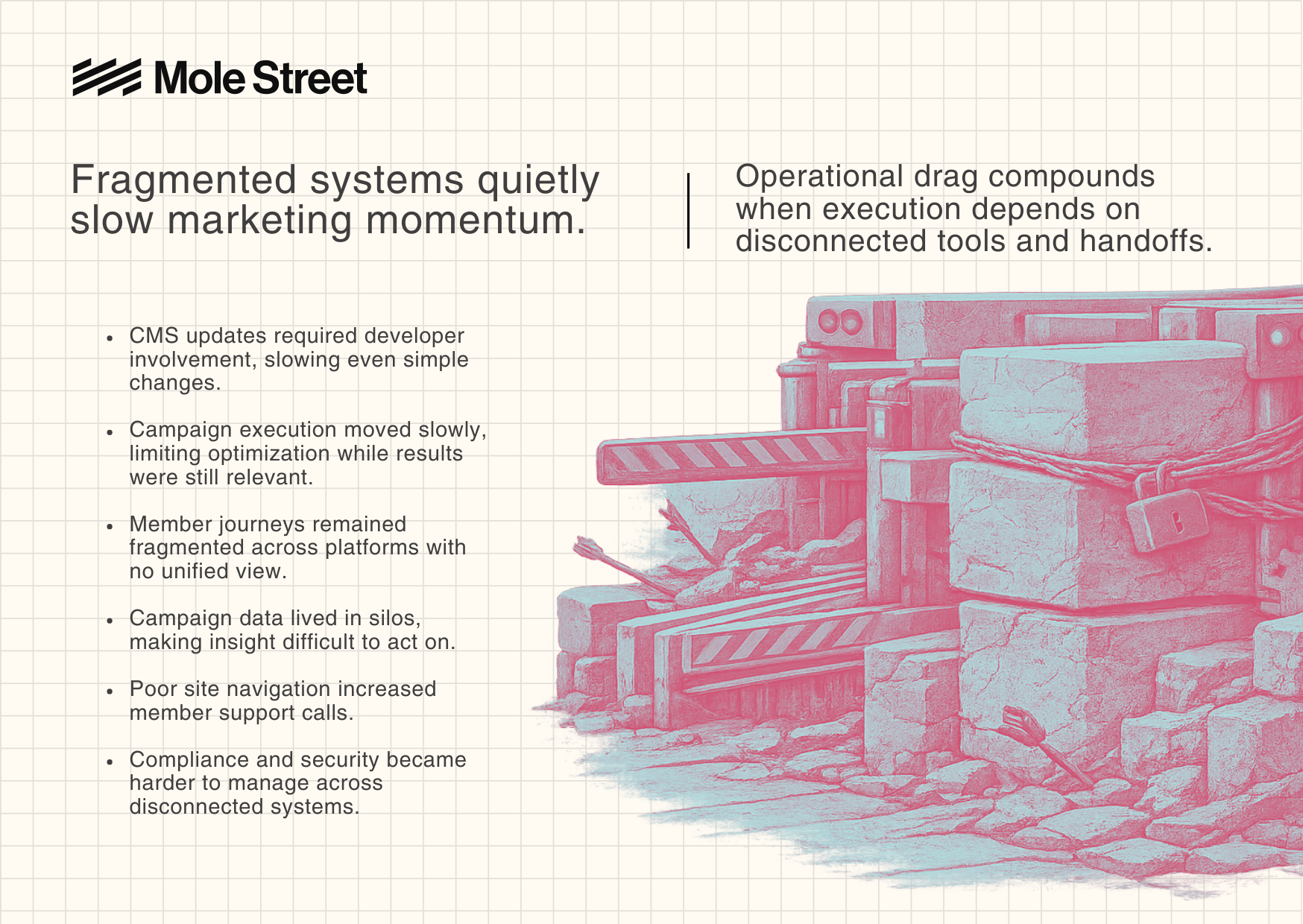
PSECU had a modern digital posture and a capable internal marketing team. Yet progress was hindered by persistent developer dependency. Even minor CMS changes required technical involvement, turning simple updates into weeks-long efforts.
Fragmented systems compounded the problem, limiting visibility into the member journey, slowing collaboration, and restricting marketing’s ability to operate with agility.
Key Obstacles Included
Every campaign required IT intervention and SQL queries
No connection between leads and members across systems
No visibility into the complete customer journey
Transaction data and credit scores were inaccessible for segmentation
Shared email addresses caused conflicts in data structure
No scalable system to support onboarding 40,000 new members
CRM limitations blocked execution of seven strategic initiatives planned for 2025
What Happened When It Mattered Most
When marketing identified an opportunity to improve navigation and reduce support calls, implementation required multiple handoffs. Developer approval, QA testing, and stakeholder sign-off all added friction. Weeks passed before changes went live, while member frustration persisted.
The Solution
In late 2023, PSECU migrated from Sitecore to HubSpot CMS with a clear goal: give marketing full operational control. Rather than replacing one CMS with another, PSECU unified marketing, sales, and operations on a single platform with integrated data and automated workflows.
Key Priorities:
Eliminate developer dependency for content updates
Consolidate fragmented systems into one platform
Improve website UX to reduce support calls
Automate approvals and publishing workflows
Ensure compliance and security by design
Enable cross-functional collaboration with shared visibility
The Results
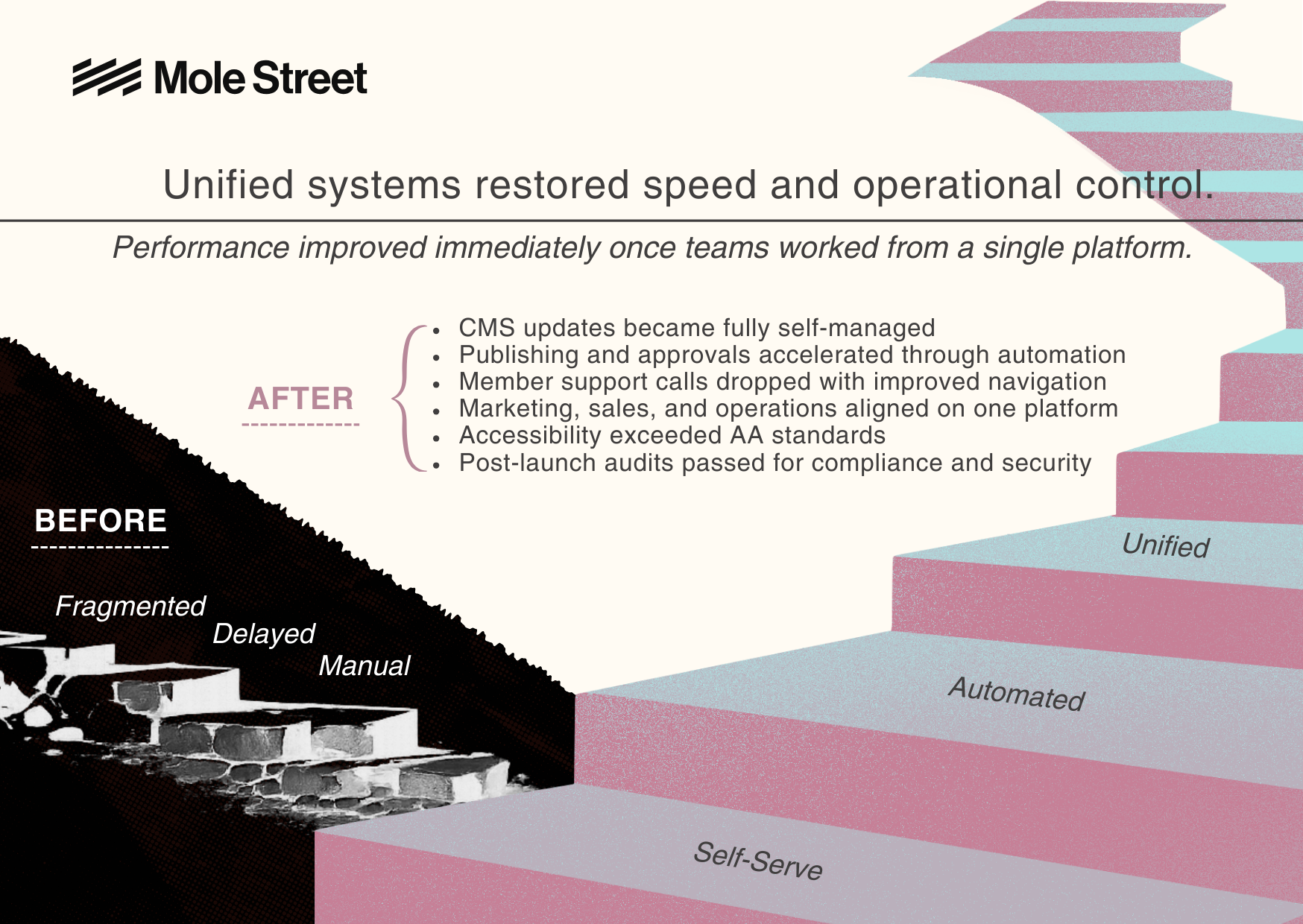
PSECU measured operational performance before and after the migration. The impact was immediate:
100% reduction in developer dependency for CMS updates
Faster publishing and approval cycles through automation
Reduced member support calls driven by improved navigation
Unified marketing, sales, and operations on one platform
Accessibility improved beyond AA standards
All post-launch audits passed for compliance and security
Where the Impact Was Felt Immediately
PSECU’s marketing team no longer has to use developers as a crutch to toggle, tweak, or even tinker with marketing campaigns. Now they have the agility to make campaign adjustments in real time to optimize member experiences, reclaiming hundreds of hours previously lost to coordination and approvals.
How Keesler Broke Free from IT Gatekeeping to Gain Marketing Independence
The Credit Union
Keesler Federal Credit Union
$5 billion in assets
365,000+ members (grew to 405,000 following the Jefferson Financial acquisition)
Mississippi’s largest credit union
Strong regional market presence
Explore the complete case study to see how Keesler unlocked marketing independence and executed at scale without IT bottlenecks.
The Challenge
Keesler struggled witht the most common challenges all credit unions face, which is accessing member data. The marketing team was determined to heighten member experiences, but the data, possessing treasure troves of member insights, was locked inside Jack Henry Symitar.
Even the simplest campaigns required SQL queries and IT involvement just to build a segment. This dependency created a persistent bottleneck. Keesler couldn’t respond to market demands or shift in real-time, leaving the marketing team stuck in a cycle of delays, approvals, and missed opportunities.
What Happened When It Mattered Most
When Keesler acquired Jefferson Financial, they needed to quickly find, group, and onboard 40,000 new members using personalized campaigns. But the marketing team couldn’t do this on their own. They had to rely on IT to pull the data, which involved manual SQL queries and checks that slowed everything down. As the crucial 90-day onboarding window closed in, their chance to engage these new members was fading.
The Solution
Keesler implemented HubSpot Marketing Hub with Kinective integration to unlock their core banking data from Symitar. The solution was designed to give the marketing team full independence, enable real-time visibility into the entire member journey, and support immediate onboarding of the newly acquired members.
Key Priorities:
Syncing 97 critical data fields from Symitar to HubSpot
Designing custom architecture to resolve shared email address conflicts
Building automated scoring and lead qualification workflows
Enabling marketing to create segments and launch campaigns without IT
Gaining full journey visibility from lead to member to product engagement
Supporting personalized onboarding of 40,000 merger members
The Results
Keesler completed the implementation in just 60 to 90 days which was faster than projected. But the real impact came after launch. With access to accurate, unified data and full campaign autonomy, the marketing team could finally act on their strategic roadmap.
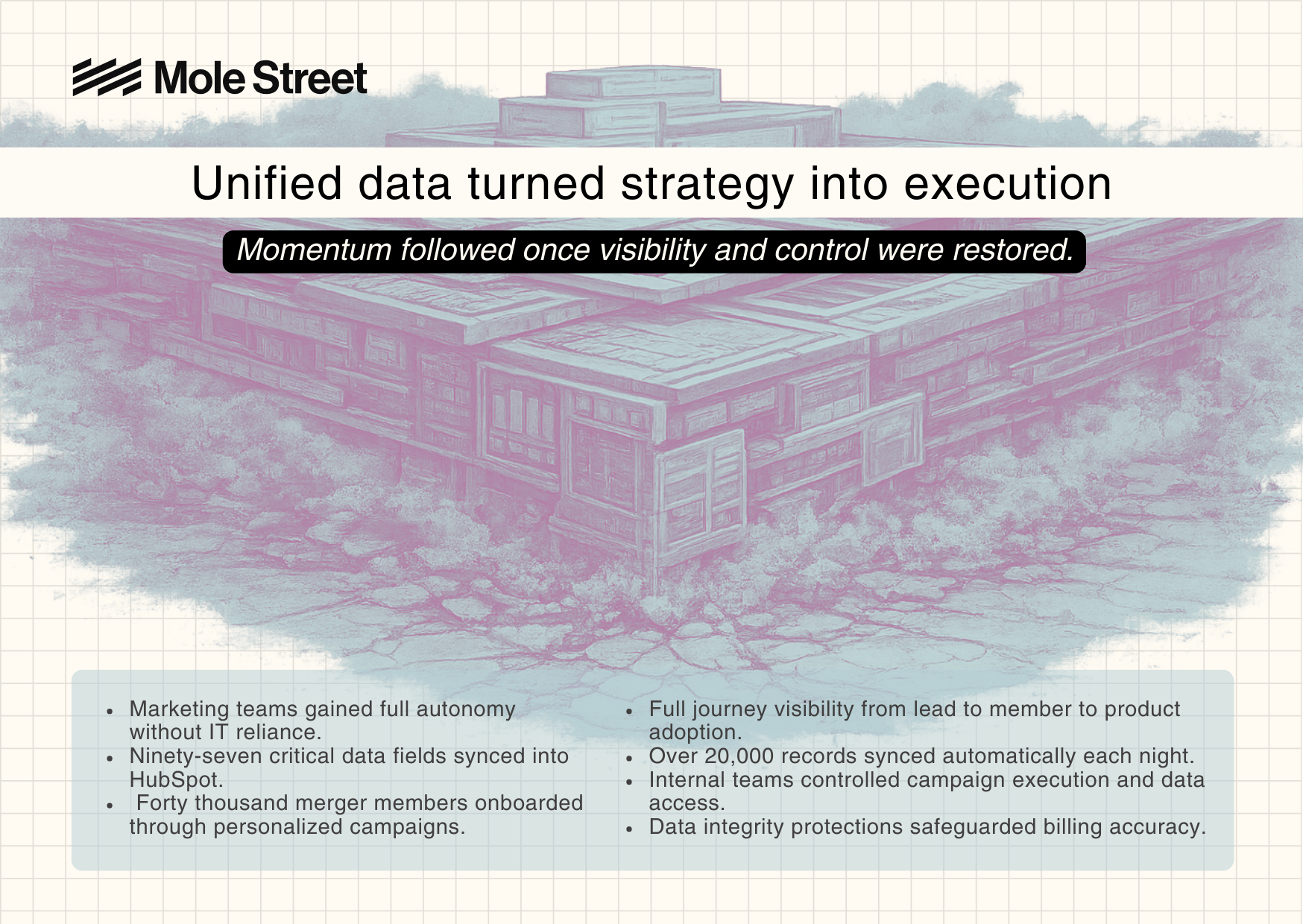
100% marketing autonomy with no IT reliance
97 critical data fields synced from Symitar to HubSpot
Successful onboarding of 40,000 merger members via personalized campaigns
Full journey visibility from lead to member to product adoption
20,000+ client records syncing automatically each night
Full internal control over campaign execution and data access
Data integrity protections that safeguarded billing accuracy
Where the Impact Was Felt Immediately
Keesler’s marketing team now had the tech stack to generate and maintain momentum whenever required. With full control over segmentation, targeting, and execution, they acted quickly to engage new members with campaigns tailored to real financial behavior and needs.
The Pattern Behind Marketing Autonomy For Credit Unions
Keesler and PSECU both faced different challenges unique to their individual situations. But if you zoom out from the minutiae and analyze each case, both credit unions were stuck in systems that prevented marketing teams from moving independently.
They both had member data, but it was buried deep within their tech stacks, concealing crucial insights that could have revealed the full spectrum of their members’ behavior. Once obtained through tech unification, everything changed.
Marketing teams understood what made their members tick, what they needed next, and what would keep them engaged. With access to these crucial insights, both credit unions were able to deliver the personalized member experiences needed to foster long-term loyalty.
What’s striking about PSECU and Keesler’s situations is that they both reflect a common reality across the industry: credit unions have the data, but lack the systems to access it and deliver the kind of personalized member experiences today’s consumers expect.
Want to Speak to a Specialist? Book a Strategy Call Now.