HubSpot

What HubSpot’s Spring ‘26 Spotlight Gets Right About Connected GTM

10 min read
What HubSpot’s Spring ‘26 Spotlight Gets Right About Connected GTM


AI is making the case for platform consolidation stronger than it's ever been.

For years, enterprise go-to-market teams have lived with a frustrating tradeoff in the systems behind marketing, sales, and service. They could consolidate onto one platform and gain coordination across every function, or they could build a stack of specialized tools and get best-in-class performance in each one.

Most teams did some version of both, and accepted the complexity because the performance gains from specialized tools made it worth it.

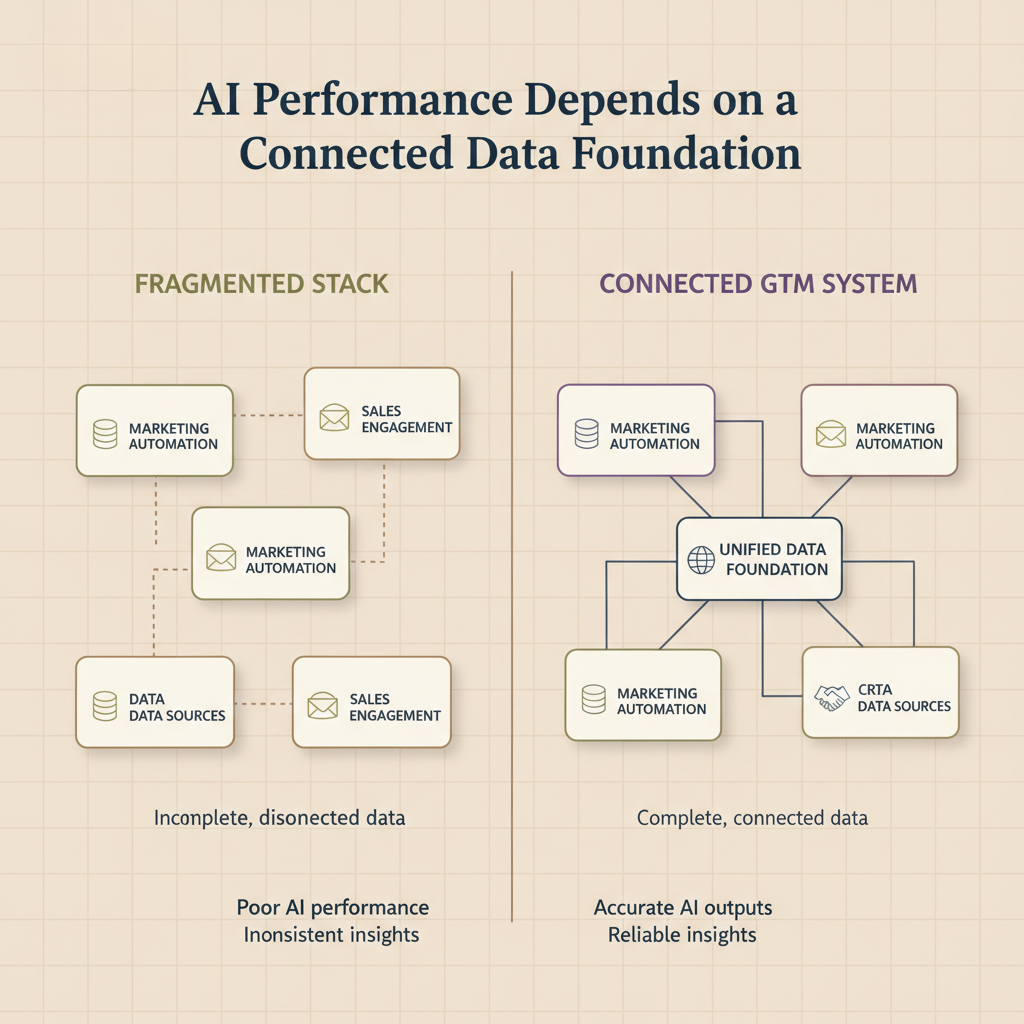
Then AI became a serious part of how GTM teams operate. AI doesn't just execute tasks - it makes judgments, and the quality of those judgments depends entirely on what the system knows going in. When customer data, engagement history, and relationship context are spread across disconnected tools, the AI in each one is working from a partial picture.

That was an acceptable tradeoff when software was just automating work, but it’s a real problem when the software is deciding what work to do.

Edited Image

This is what makes HubSpot’s Spring ’26 Spotlight more significant than a typical product update. On April 14, the company made four major announcements:

  • AEO (Answer Engine Optimization): a new tool built to help teams understand and improve how their brand shows up in AI search experiences like ChatGPT and Gemini
  • Prospecting Agent Updates: new capabilities that use CRM and signal data to prioritize accounts, identify buying groups, and structure outreach
  • Customer Agent Updates: expanded controls, guardrails, and context that make AI support more usable in higher-trust service environments
  • Pricing Changes: new industry-leading pricing models for Prospecting and Customer Agent based on outcomes instead of usage

Taken together, they represent HubSpot's bet that in an AI-driven GTM environment, the platform with the most complete view of the customer produces the best outcomes - and that the CRM is the right foundation to build that on.

AEO: Control How Your Brand Shows Up in AI Search

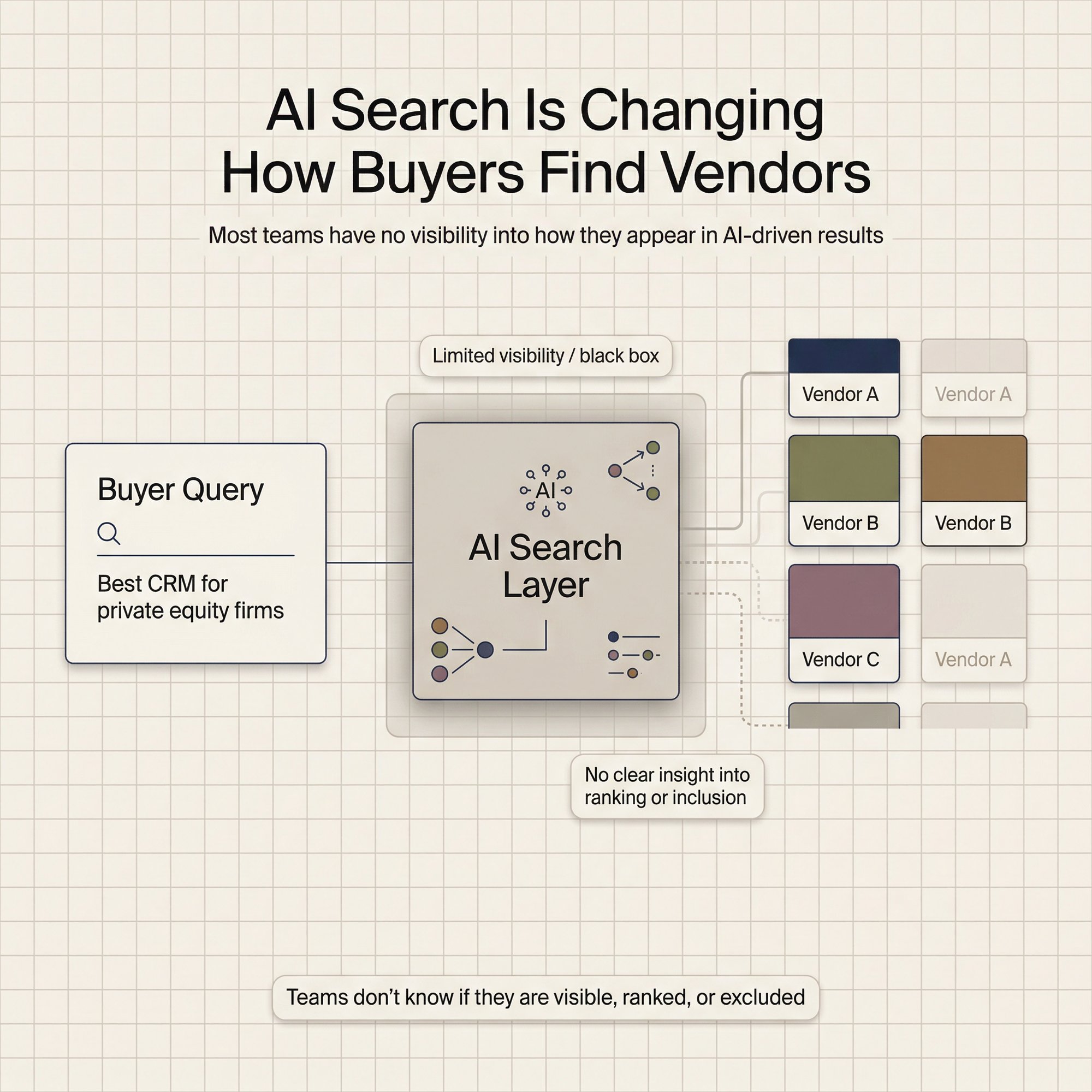
AI search is changing how buyers find vendors, and most teams don't have visibility into how they're showing up (or not showing up) in those results.

Create_a_clean_structured_cons_Nano_Banana_2_45904

HubSpot's AEO tool tracks how a brand appears in AI-generated answers across tools like ChatGPT, Perplexity, and Gemini, including visibility, sentiment, citations, and competitor presence. The product team shared that prospects from AI sources are at least 3x more likely to convert than any other source.

But what makes AEO more compelling is what it's connected to. It's tied to the products, audiences, and competitive information already inside HubSpot CRM, which means teams can connect AI visibility directly to the parts of the business they're trying to grow.

For enterprise credit unions and large accounting firms, that context is important. They need visibility in the right conversations, tied to the right services, with messaging that reflects the realities of a regulated buying environment.

AEO gives teams a way to manage that with the context they already have in the platform.

Prospecting Agent: Structured Outreach in Complex Buying Environments

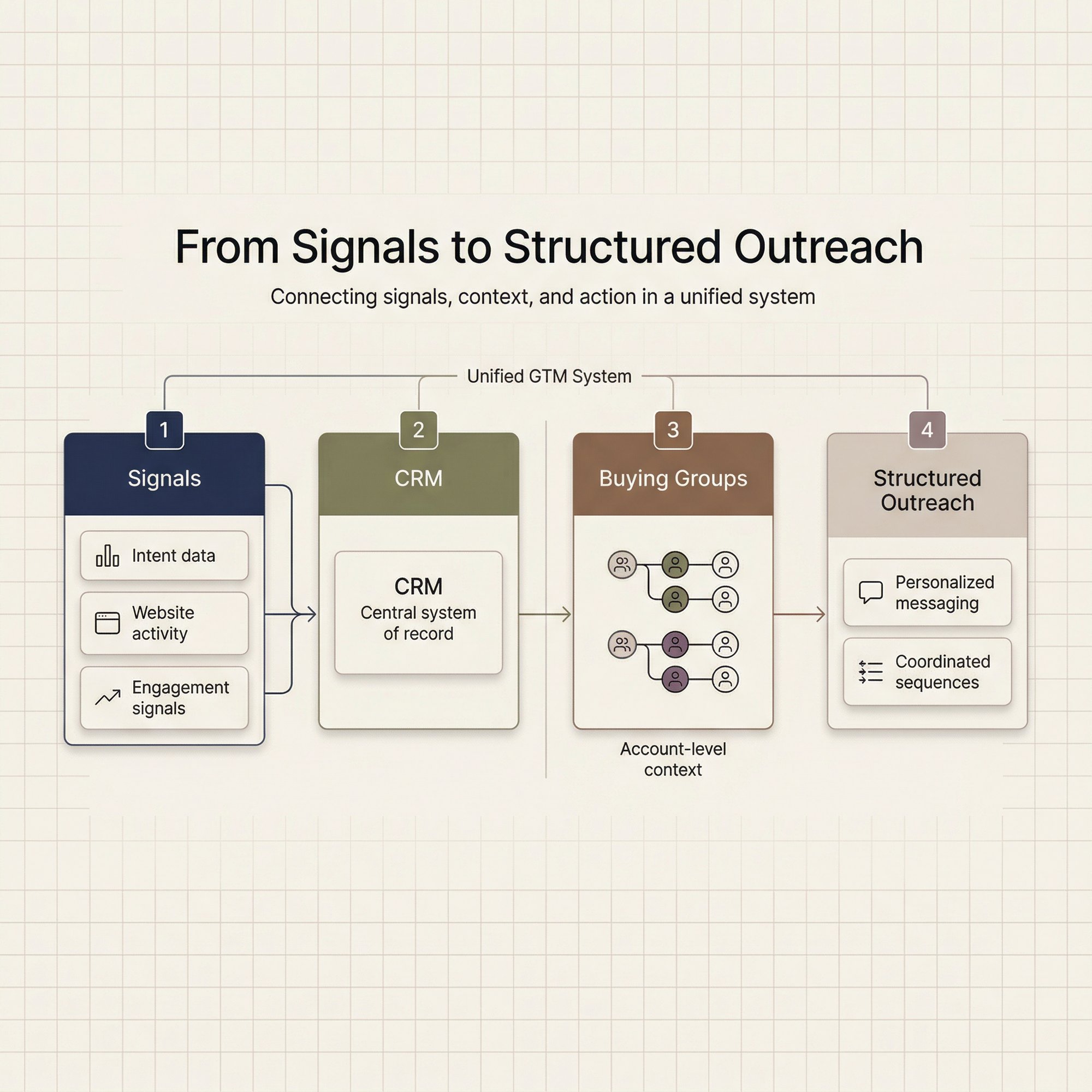
Good outbound starts with knowing which accounts deserve attention and why. That requires a complete picture - account history, buying group coverage, intent signals, recent activity - and until now, most teams have had to piece that together manually from systems that don't talk to each other cleanly.

Create_a_clean_structured_cons_Nano_Banana_2_57731

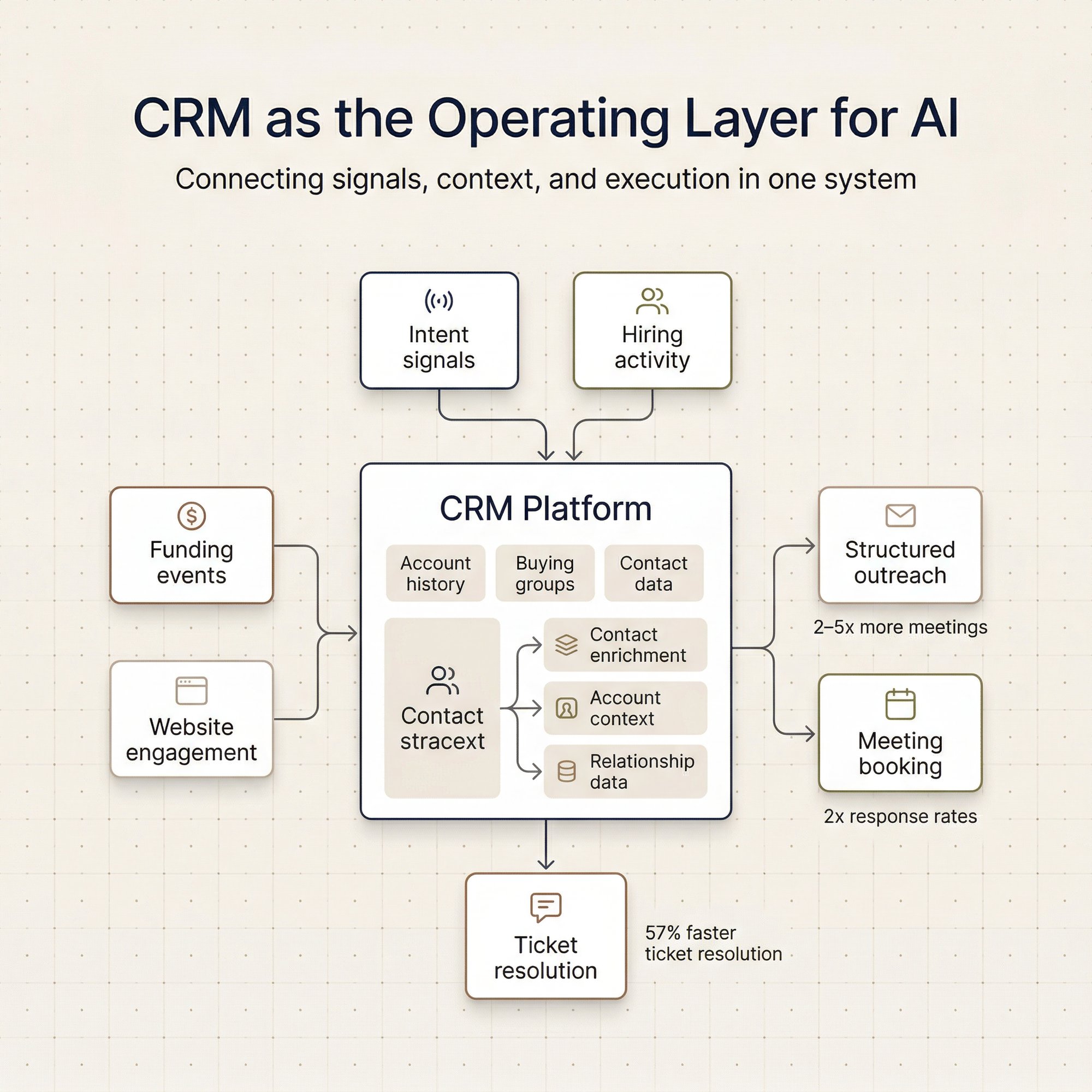
With the Spring '26 update, HubSpot's Prospecting Agent now pulls in signals like intent, hiring, funding, and web activity automatically. It maps buying groups, enriches missing contacts, and turns it into structured outreach plays - all from within the CRM where the account history already lives.

For large accounting firms, business development often depends on partners and practice leaders who know their clients well but rarely have a consistent process for acting on growth signals. When the system surfaces the right account at the right moment with the relevant context already in view, expansion becomes less dependent on individual memory and more repeatable across the firm.

Credit unions have a different motion but a similar need. Growth depends on recognizing the right moment to deepen a member relationship - and that's nearly impossible when the context is spread across systems. Beta customers are already seeing 2-5x more meetings booked against industry benchmarks and 2x response rates compared to human-only outreach.

Customer Agent: Controlled AI in High-Trust Service Environments

Context matters just as much in customer service as it does in prospecting. And in regulated industries, teams need AI that can draw on the full customer relationship while staying within clearly defined boundaries.

The Spring '26 update to Customer Agent addresses that directly. New controls include testing previews for email, working-hours settings, workflow-based deployment, agent guidelines, handoff rules, inline citations, multi-brand support, and percentage rollout - giving teams the governance infrastructure to deploy AI in environments where the stakes of a bad response are high.

For credit unions, every service interaction is part of a longer relationship. A member asking about rates or fees is a touchpoint in a multi-year relationship that has to be handled consistently. The same is true for large accounting firms. Service and advisory interactions sit close to compliance and trust, and responses have to be accurate and appropriate to the client context.

Customers using Service Hub with Customer Agent are seeing a 57% increase in ticket close rate and 39% less time spent closing tickets - results that reflect what's possible when AI has the right guardrails in place.

A Pricing Model Built Around Results

In perhaps the biggest surprise of all, HubSpot used the Spring ’26 Spotlight to announce an industry-leading change to pricing for both agents.

Most AI tools currently on the market charge for activity. The meter starts running the moment the system generates output, on the assumption that usage is a reasonable proxy for value. Enterprise buyers in regulated industries have never been particularly convinced by that logic, and HubSpot is betting they're right.

Prospecting Agent now only charges when a rep acts on the intent signals it surfaces, not for the signals themselves. Customer Agent charges per ticket resolution, not per conversation. It's a significant departure from how most AI tools are sold.

What makes it interesting beyond the packaging is what it implies about the product. A vendor can only price around outcomes when the system has enough visibility into the workflow to measure them.
Create_a_clean_structured_cons_Nano_Banana_2_34433

That kind of visibility only exists when the data isn't fragmented - when the CRM is the connective tissue across every function. In that sense, the pricing change is not just a commercial decision but a statement about what the platform itself is capable of.

Final Thoughts

For years, the debate between platforms and point solutions came down to capability. What AI is revealing is that capability was never the whole story. The system that knows the most about the customer - across every function, every interaction, every stage of the relationship - is the one that produces the best outcomes. That's what HubSpot is building toward, and this launch is the clearest case they've made for it yet.

For trust-driven enterprises like credit unions and accounting firms, the stakes are higher than most. Relationships span years, compliance expectations are tight, and a bad interaction has consequences that outlast the moment. This release points to a more connected, more controllable, and more useful approach to AI across the full customer lifecycle.

Want to Take The First Step Forward to a Unified Tech Stack?