Recently, Mole Street held a fantastic webinar covering some of the biggest challenges experienced by credit unions and banks. AI is the shiny object that everybody is talking about across all industries, and businesses are investing desperately in AI solutions that will propel them closer to their goals.
A lot of these efforts are wasted. Only 13% of companies experience significant returns from their AI investment (Gartner, 2026). We know this is a sticking point for banks and credit unions, which is why we held a webinar on how institutions can:
- Get a measurable return: Choose a first AI use case tied to a business problem, with a baseline metric to prove the result.
- Find new revenue: Use the member data you already hold to spot cross-sell opportunities and members approaching retirement.
- Get projects approved faster: Set guardrails that satisfy security teams and regulators from the first conversation.
Data Quality Is the Top Concern, but It Should Not Stop You From Starting
Watch from 15:06
When we polled attendees at the start of the session, most said they are not using AI yet. The most common obstacle they named was data quality.
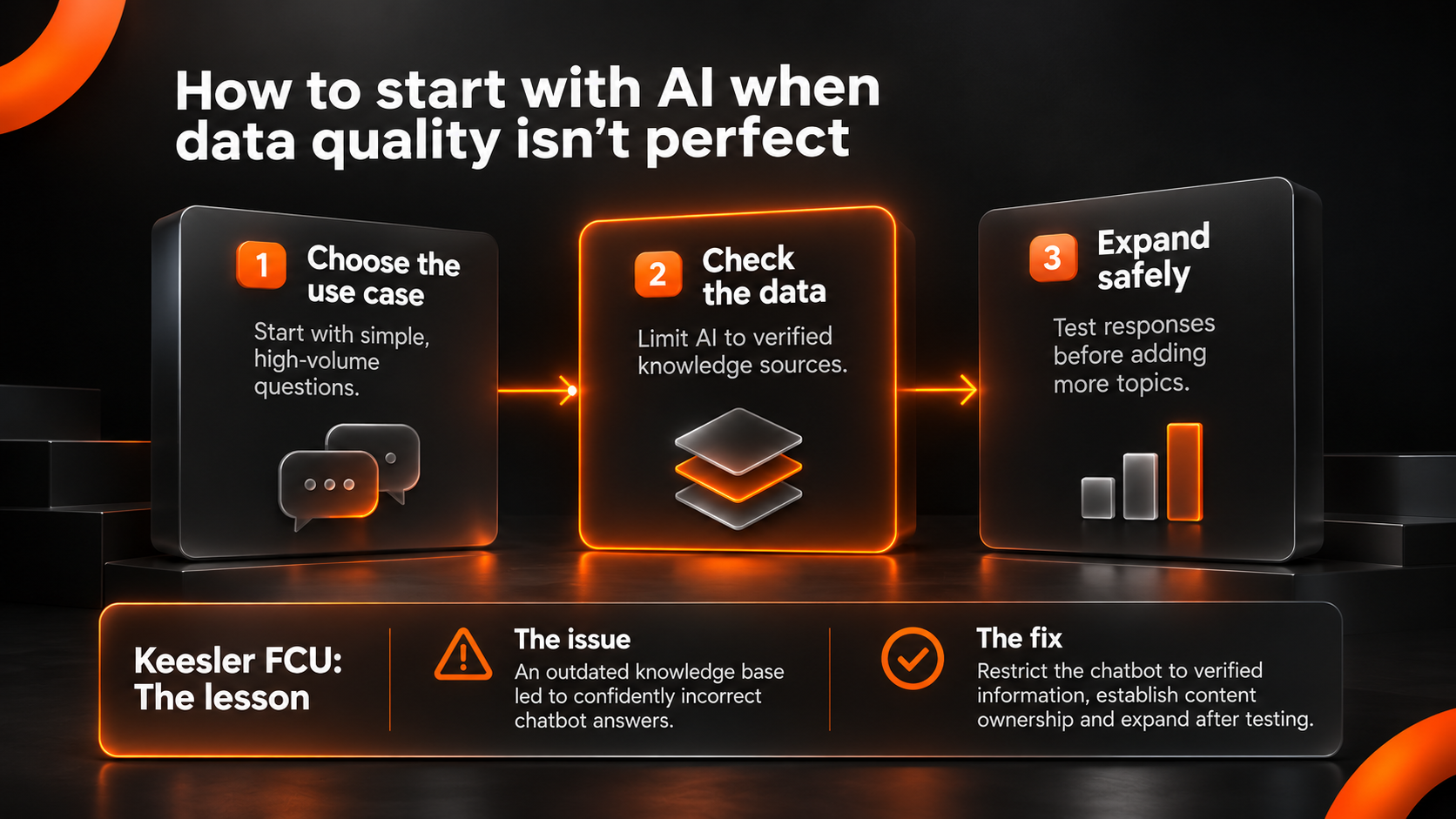
The concern is fair. AI built on poor data produces skewed results, and that is especially risky for institutions handling member information. But cleaning every record before you begin is rarely necessary. What matters is choosing a use case where the data it depends on is already good enough.
Keesler Federal Credit Union learned this when it launched a chat capability for members. The use case was sound, but parts of the knowledge base behind it were out of date, so the chatbot gave members inaccurate answers with full confidence. AI treats all information as equally current unless it is told otherwise, which means someone has to decide what the model can see and how recent that information needs to be.
For institutions that feel stuck, a smaller first version of the same idea is often the better route. A chatbot limited to simple questions, such as where to find an account number, still reduces the volume agents handle, and it does not need the full knowledge base behind it.
Key takeaway
Data quality is a reason to choose your first use case carefully, not a reason to wait. Pick a use case whose data is current enough today, and start with a smaller version of it.
How to Identify an AI Use Case Worth Pursuing
Watch from 23:18
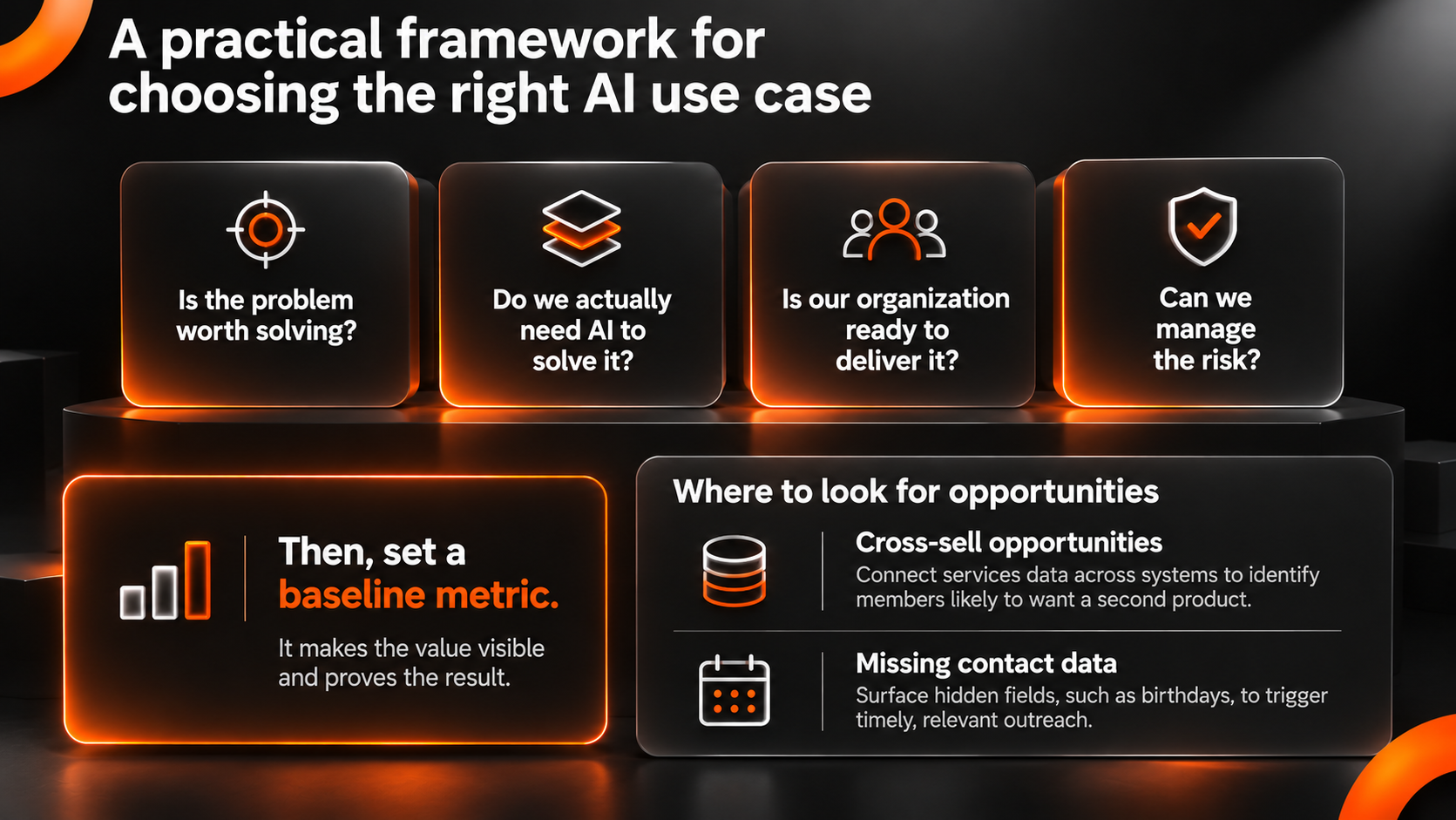
The best use cases start with friction in the business, such as a slow process, a manual task, or a stage where members drop out. From there, four questions help decide whether AI is the right answer:
- Is the problem worth solving?
- Do we actually need AI to solve it?
- Is our organization ready to deliver it?
- Can we manage the risk?
If all four answers are yes, set a baseline metric before building anything. Many organizations are investing in AI without being able to show what it returned, and a baseline is what makes the value visible afterward. Keesler applied this to loan approvals, using data from outside the credit bureaus to speed up decisions while demonstrating that the model does not introduce bias.
Unstructured data is a strong place to look for opportunities. Call notes are a good example. A note from two years ago saying a member is about to retire is nearly impossible to find with a keyword search, but AI can scan thousands of notes, surface the members who mention retirement, and give the sales team a short list to verify and contact.
Opportunities also tend to sit in data the institution already has but cannot easily see. Two examples from HubSpot clients show the pattern:
- Cross-sell opportunities: Services data often lives in several systems that marketing cannot access. Connecting it shows which members are likely to want a second product.
- Missing contact data: One client stored member birthdays in loan records, three tables away from the contact record. Once marketing could reach that field, the team could trigger birthday emails automatically.
Key takeaway
Start from a business problem, ask the four questions, and set a baseline metric before you build. The best early opportunities are often in data your team already has but cannot easily see, such as call notes and records held in other systems.
What AI Can Do, What Needs a Human, and What It Should Never Decide
Watch from 42:55
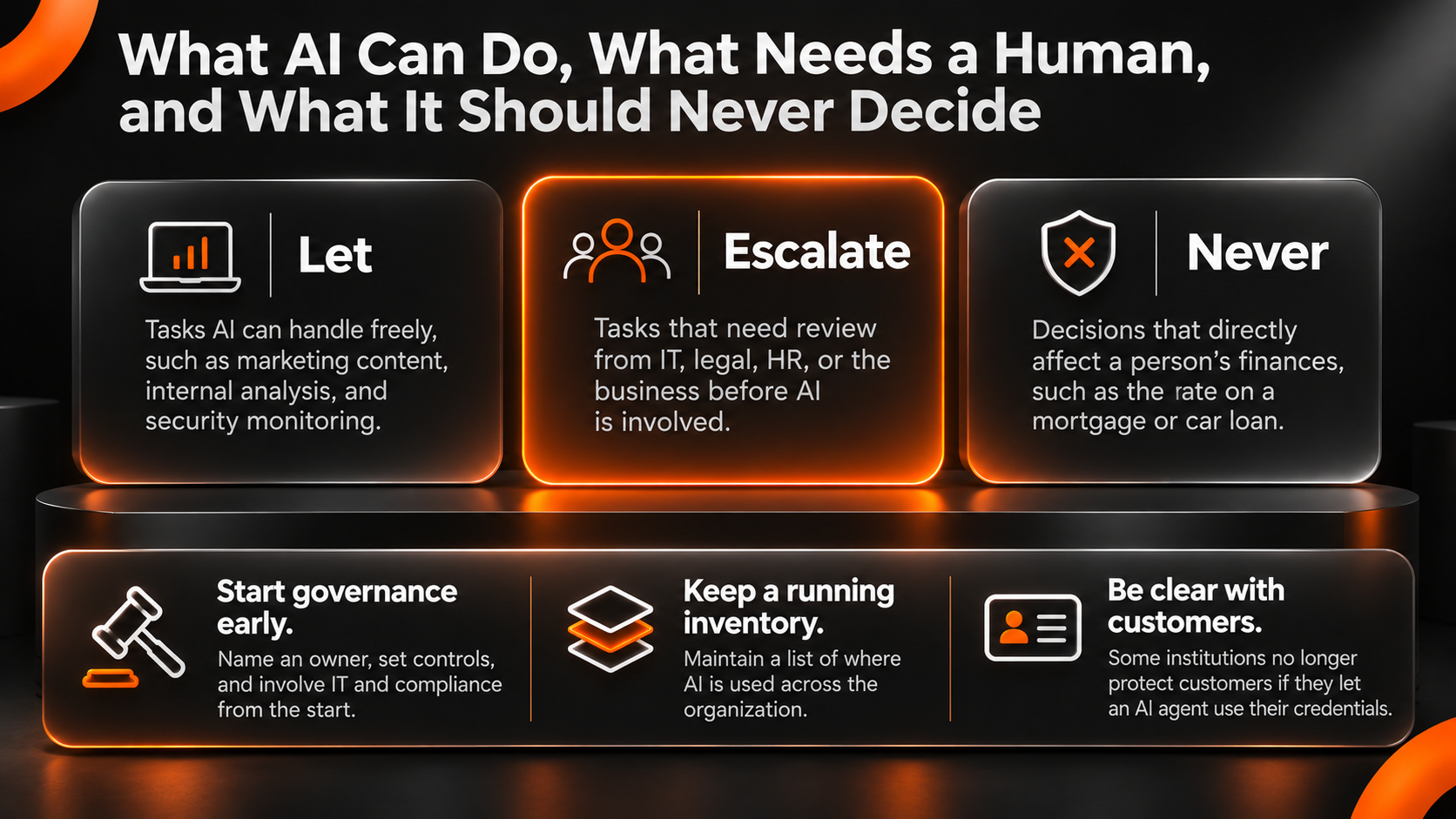
A simple framework helps teams decide where AI belongs: let, escalate, never.
- Let: Tasks AI can handle freely, such as marketing content, internal analysis, and security monitoring.
- Escalate: Tasks that need review from IT, legal, HR, or the business before AI is involved.
- Never: Decisions that directly affect a person’s finances, such as the rate on a mortgage or car loan. Regulators in both the US and EU expect explainable, human-made decisions here. AI can gather the information, but a person makes the call.
Regulators have also moved faster than many institutions expected this year, and they have made clearer what AI can be used for. That clarity opens up more use cases than many teams assume.
Governance works best when it starts early. Every AI capability needs a named owner who is accountable for its risks and controls. IT and compliance teams are generally willing to help when they are consulted at the start, and far more resistant when they are brought in at the last minute. A running list of where AI is used across the organization makes it easy to answer when a regulator asks.
Customer-facing policies are changing too. Some banks and credit unions have started telling customers they will no longer protect them if they let an AI agent use their banking credentials.
Key takeaway
Sort every AI use case into let, escalate, or never, give each one a named owner, and involve IT and compliance from the first conversation. A clear framework makes more use cases approvable, not fewer.
AI Has Costs That Are Easy to Underestimate
Watch from 53:49
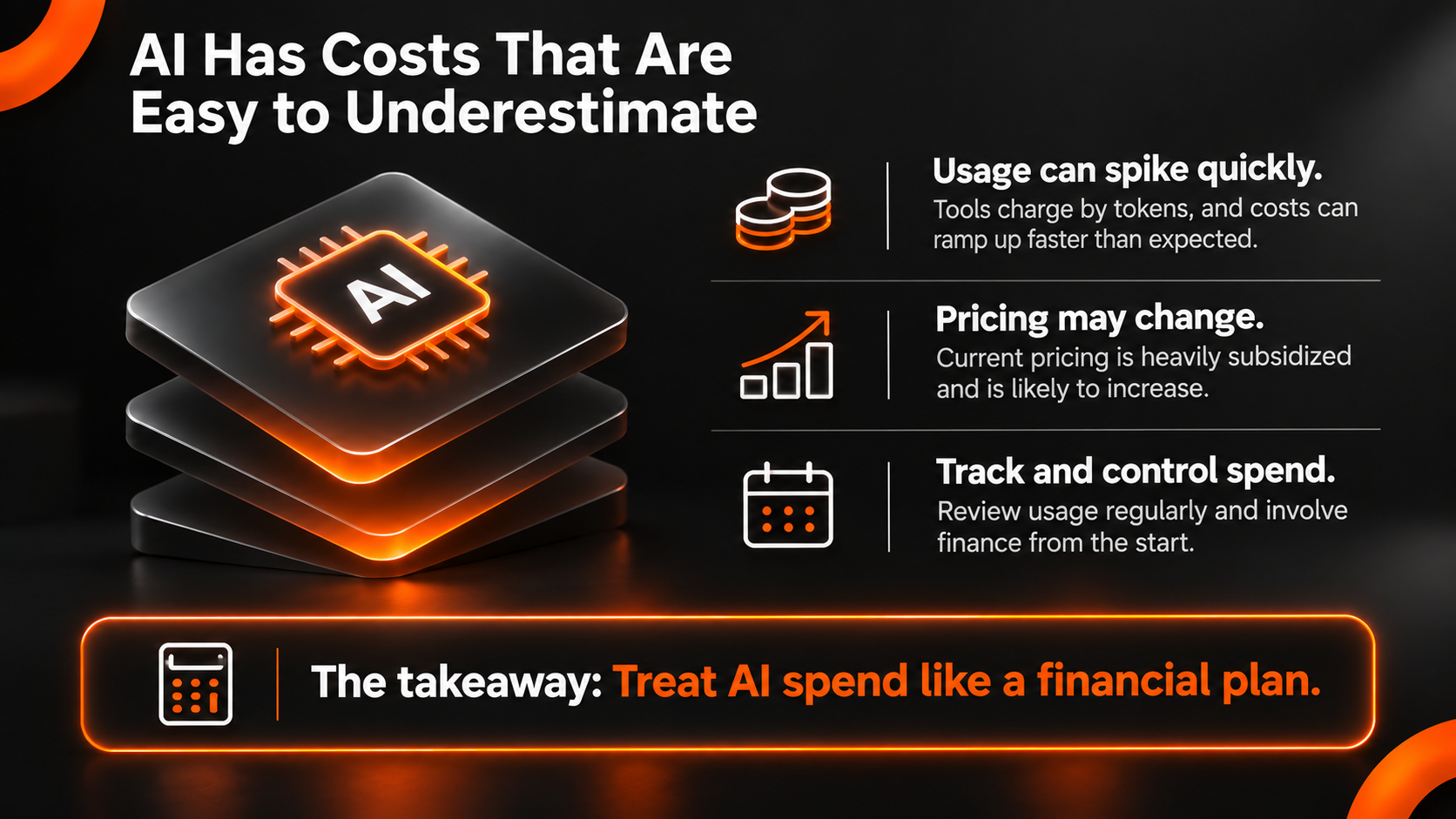
AI pricing is harder to forecast than most software. Tools charge by tokens, and the number of tokens a request uses varies from one tool to another. Some organizations have used two months of budget in the first week and had to rethink how their teams were using the tools.
There is also a longer-term risk. Anil believes current pricing is heavily subsidized by vendors and will change, so his team reviews usage and cost controls every week. Whether or not prices rise, bringing the finance team into AI planning from the beginning keeps spending predictable.
Key takeaway
Budget for AI usage the way you would any variable cost. Bring finance into the planning, monitor usage weekly, and expect pricing to change.
You Do Not Need Every System Connected to Start
Watch from 55:47
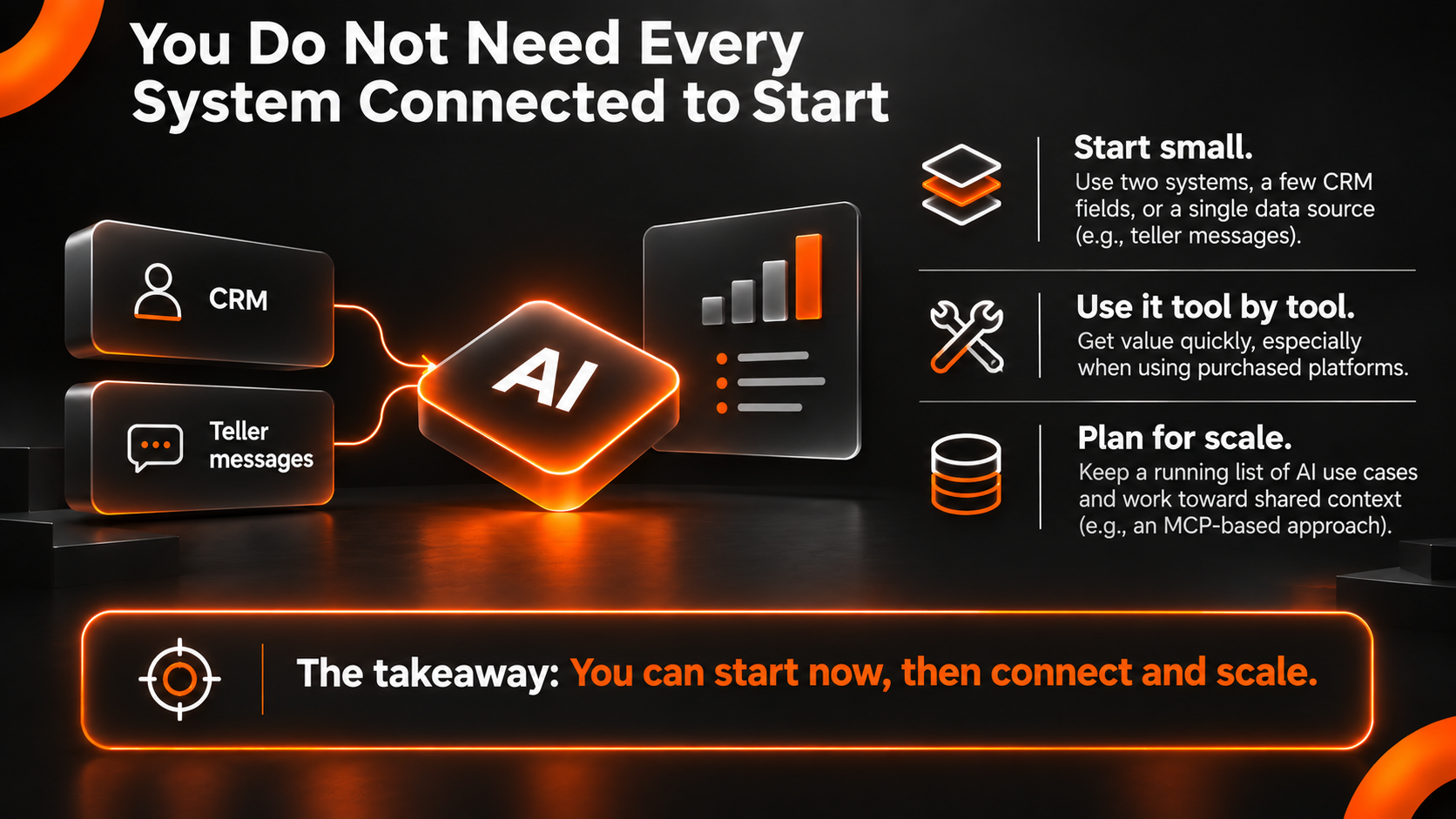
A common assumption is that AI only works once every system is connected. In practice, you can begin with two systems, with three fields from your CRM, or with a single source such as the messages tellers send each other about members. AI can read thousands of those quickly and point to patterns, such as a bottleneck in how tellers handle a particular request, that a person would not find by reading them one at a time.
Using AI tool by tool works especially well for institutions that buy their platforms instead of building them. The risk is that decisions made in one tool conflict with another, so it helps to plan for shared context as you expand. Keesler is exploring an MCP-based approach for this, which Anil described as early and still largely theoretical. A running list of where AI is used gives any institution a starting point for the same planning.
Key takeaway
Begin with one or two systems, or a handful of fields, and expand from there. Keep a running list of where AI is used so you can plan for shared context and answer compliance questions later.
Results the Panel Has Seen
Watch from 59:44
The results so far come from specific, practical use cases:
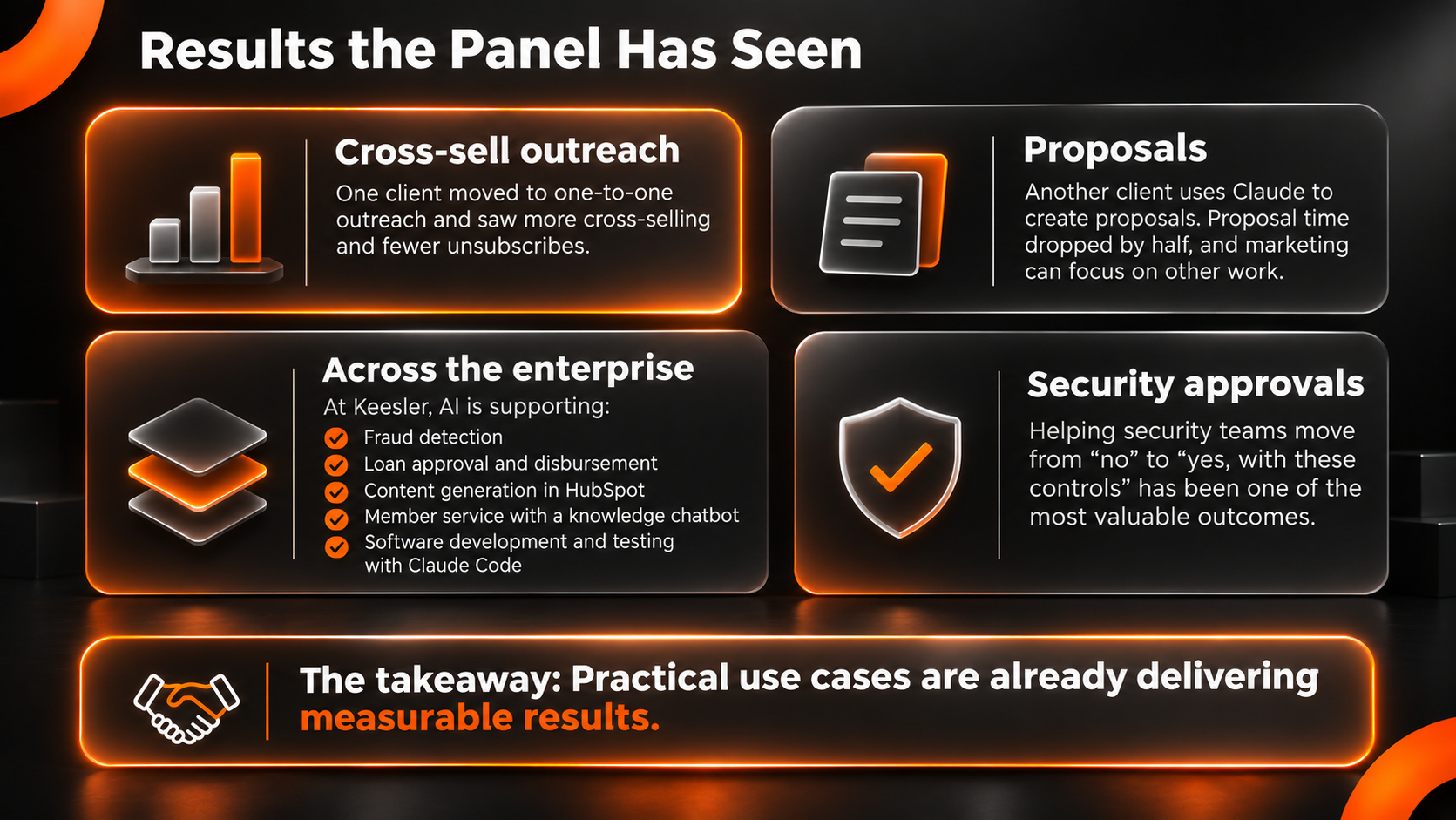
- Cross-sell outreach: One client rolled out a cross-sell framework last quarter. Outreach is one-to-one instead of mass messaging, and the client has seen more cross-selling and fewer unsubscribes.
- Proposals: Another client now has loan officers create proposals with Claude instead of requesting them from marketing. Proposal time dropped by half, and the marketing team can focus on other work.
- Across the enterprise: At Keesler, AI is helping with fraud detection, loan approval and disbursement, content generation in HubSpot, member service through a knowledge chatbot, and software development and testing with Claude Code.
- Security approvals: Helping security teams move from “no” to “yes, with these controls” has been one of the most valuable outcomes for Todd Inskeep’s clients.
Key takeaway
The results so far come from specific, practical use cases: targeted cross-sell outreach, faster proposals, quicker lending and fraud decisions, and security teams that approve AI with clear controls.
What to Do in Q1
Watch from 1:05:14
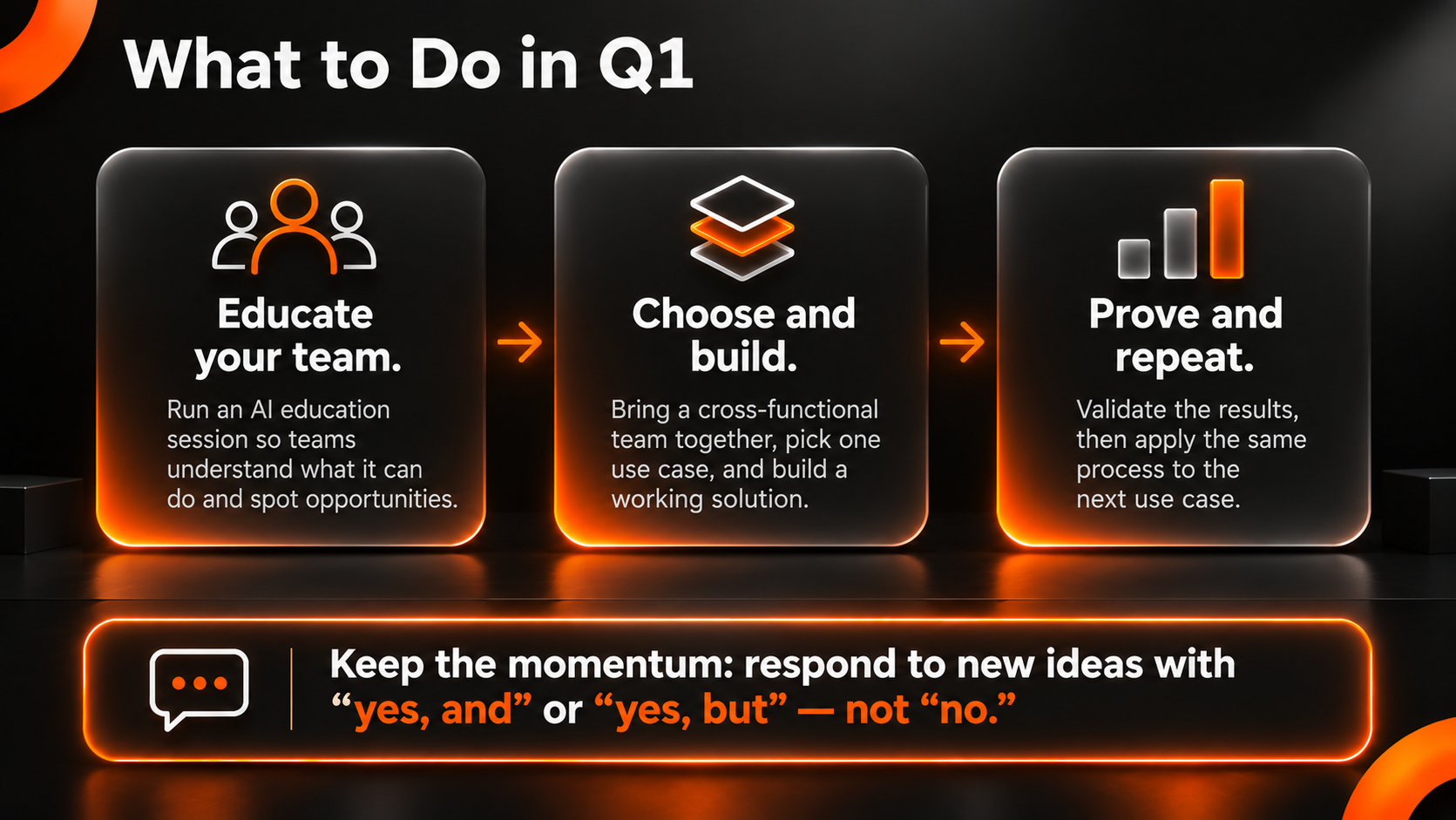
Institutions that want progress in the first quarter should start with people, not tools. The first step is an AI education session, so teams understand what predictive and generative AI can do and can identify problems it could solve.
From there, bring a cross-functional team together for a workshop and choose one use case. Build it, prove it works, and then repeat the process with the next one. Throughout, respond to new ideas with “yes, and” or “yes, but” instead of “no.”
Key takeaway
Hold one cross-team workshop, choose one use case, and prove it before expanding. Responding to ideas with “yes, and” keeps teams bringing problems forward.
Book a free AI Readiness Assessment for your bank or credit union
By the end of the session, you will know:
- Data readiness: Whether your member and customer data is ready to use with AI today.
- Revenue opportunities: Which cross-sell and loan opportunities are already in your data.
- Regulatory safety: Which AI uses are safe to act on when examiners review them.
- Your first step: What to do first, with no data-science team required.
Frequently Asked Questions
Do banks and credit unions need to clean their data before using AI?
Not always. You need data that is good enough for the specific use case. Starting with one narrow use case lets you find and fix data issues as you go, instead of cleaning everything first.
Do we need to connect every system before starting with AI?
No. You can begin with one or two systems, or even a few fields from your CRM. As you expand, plan for shared context so tools stay consistent with each other.
What should AI never decide at a bank or credit union?
AI should not make decisions that directly affect a person’s finances, such as the rate on a mortgage or car loan. These need human judgment and explainable reasoning. AI can prepare the information that supports the decision.
Who should own AI in a bank or credit union?
Every AI capability should have a named owner who is accountable for its risks and controls, with IT and compliance involved from the start.