Articles

12 Reports Every CPA Firm Needs to Scale Past $20M

22 min read
12 Reports Every CPA Firm Needs to Scale Past $20M

Referral dependency is pervasive in the accounting industry, with many firms leaning on relationships to bolster their client base. Reputation, referrals, and partner networks can fuel meaningful growth and generate millions in revenue. But can they carry you past the $20M mark?

Almost certainly not. At a certain point, you will hit a ceiling because there are simply too many moving parts, variables, and revenue streams to manage by instinct alone. As complexity increases, it must be actively monitored if your firm is to move forward with clarity, control, and direction.

Your reports are what help you keep your finger on the pulse of your firm’s performance data, and those who recognize this are able to move into a new echelon of growth where decisions are driven by clarity and control.

In this blog, we’ll walk through the 12 reports that give CPA firms the visibility they need to scale past $20M with confidence. These reports highlight the metrics that matter most, helping leadership stay aligned, spot risk early, and make smarter decisions as the firm grows.
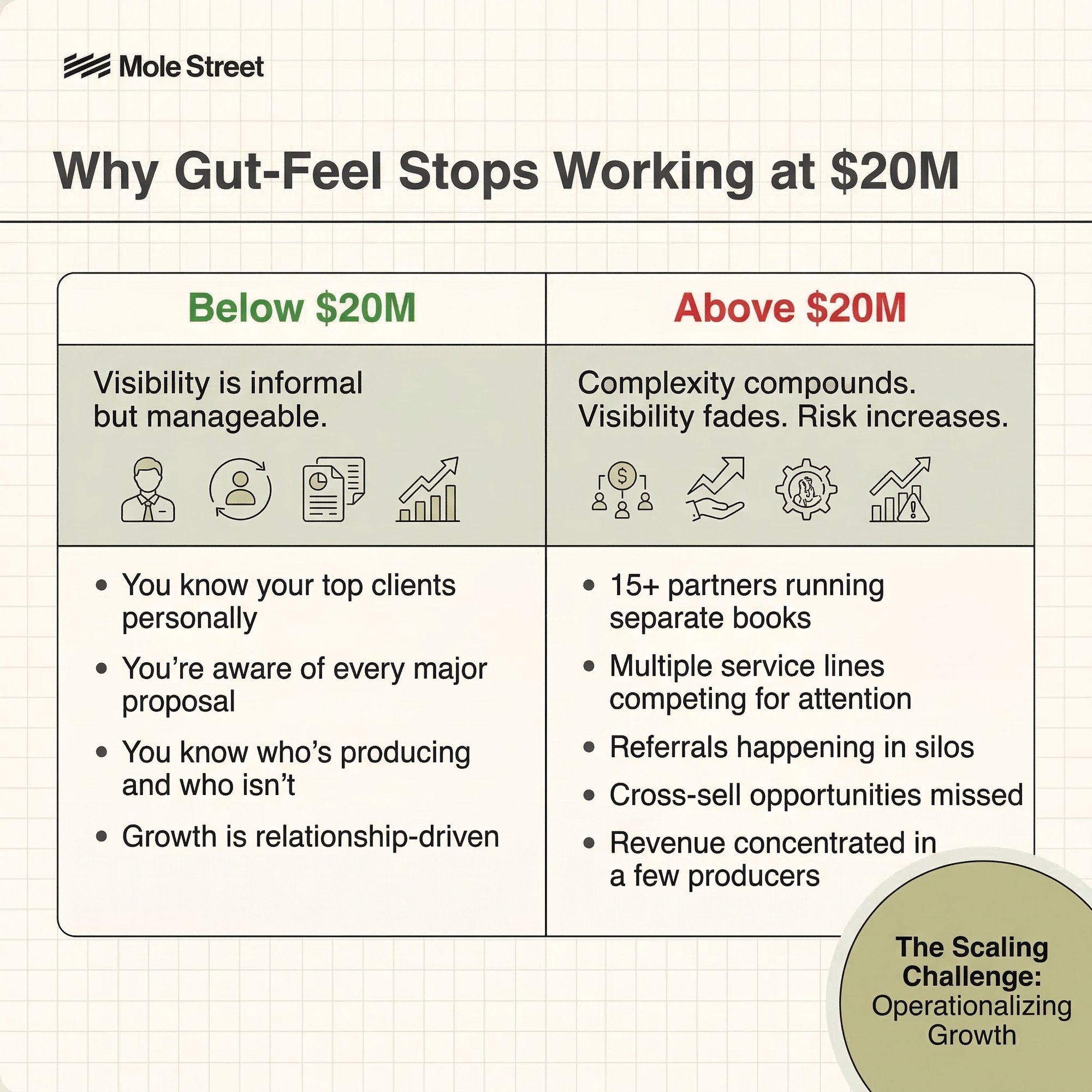
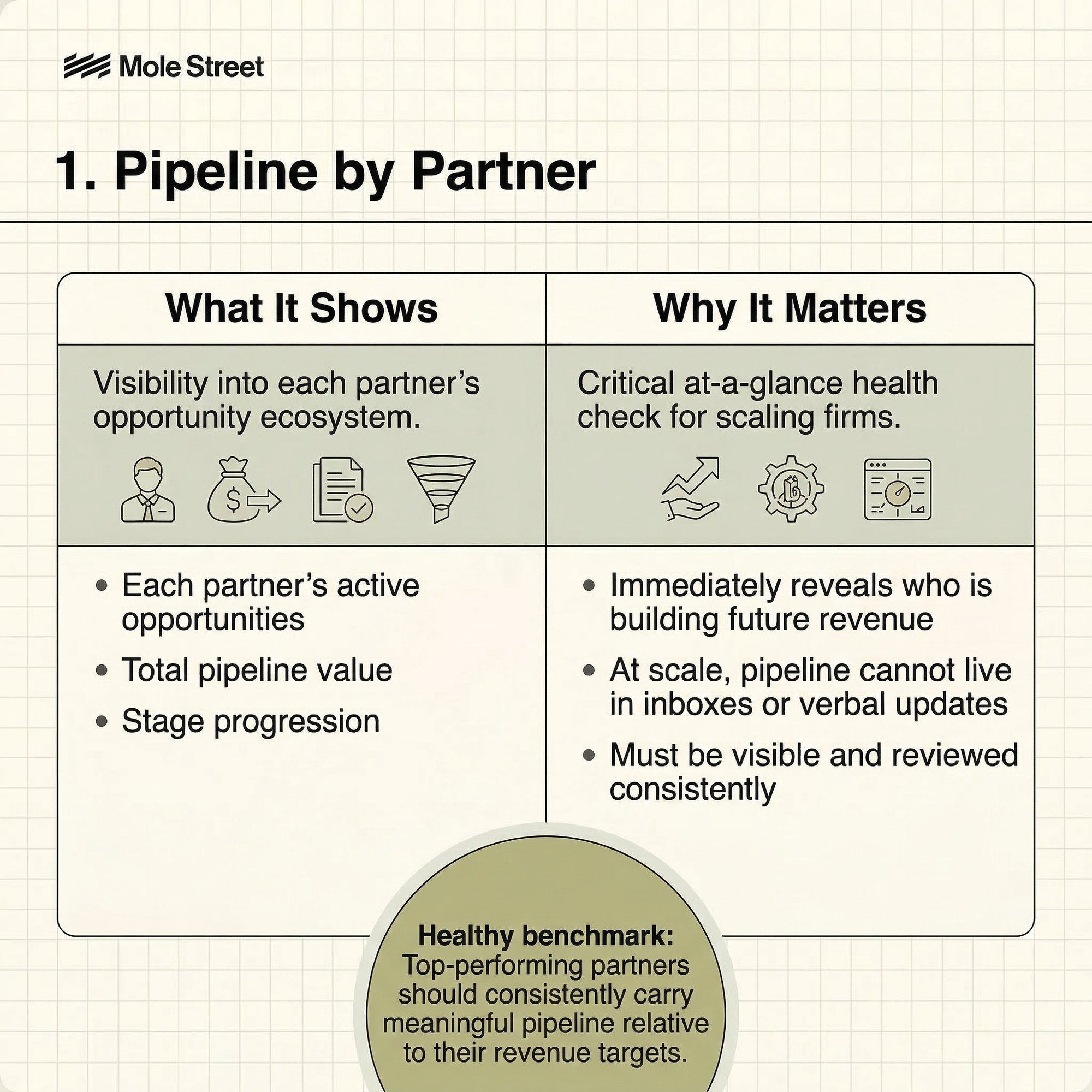
Image 1

The 12 Reports Every CPA Firm Should Review

We’re in the midst of the digital era and businesses are drowning with data. Traffic metrics. Tax deadline email open rates. Referral source spreadsheets. Billable hour targets.

The list is endless. There are countless rabbit holes that can pull your attention away from the metrics that actually drive growth. Instead of tracking everything, focus on what matters. Here are the 12 reports every CPA firm should prioritize.

Growth Reports

Growth is always the first question on the table. These reports provide a forward-looking view of your business development efforts, helping you see where future revenue is coming from, and whether it’s strong enough to sustain scale.

1. Pipeline by Partner

The Pipeline by Partner report shows leadership exactly how future revenue is forming across the firm. Each partner's active opportunities, total pipeline value, and deal progression live in one place instead of scattered across inboxes and hallway conversations.

Once a firm passes a certain size, "I think we've got some things in the works" stops being acceptable. This report forces the question: who's actually building pipeline, where are the gaps, and are BD efforts pointed at the right revenue targets?

Image 2

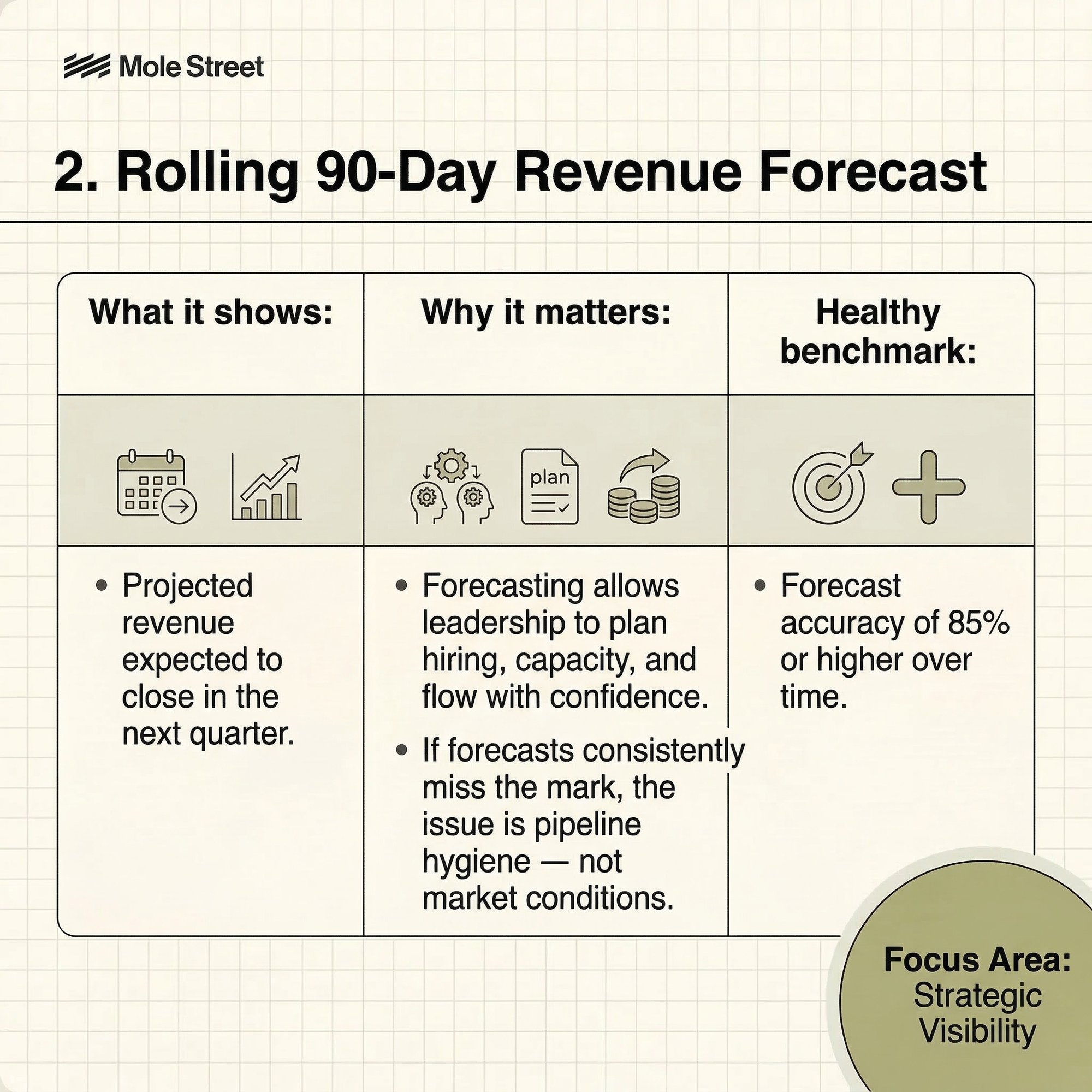
2. Rolling 90-Day Revenue Forecast

The Rolling 90-Day Revenue Forecast projects what’s likely to close over the next three months based on deal value, stage, and probability. Instead of waiting to see what lands, you get a running estimate of where revenue is actually headed.

That might sound simple, but it changes how you operate. If Q3 is going to fall short, you want to know in May, not August. This report surfaces those shortfalls early enough to do something about them, whether that’s ramping activity, adjusting pricing, or reprioritizing the pipeline.

Image 3

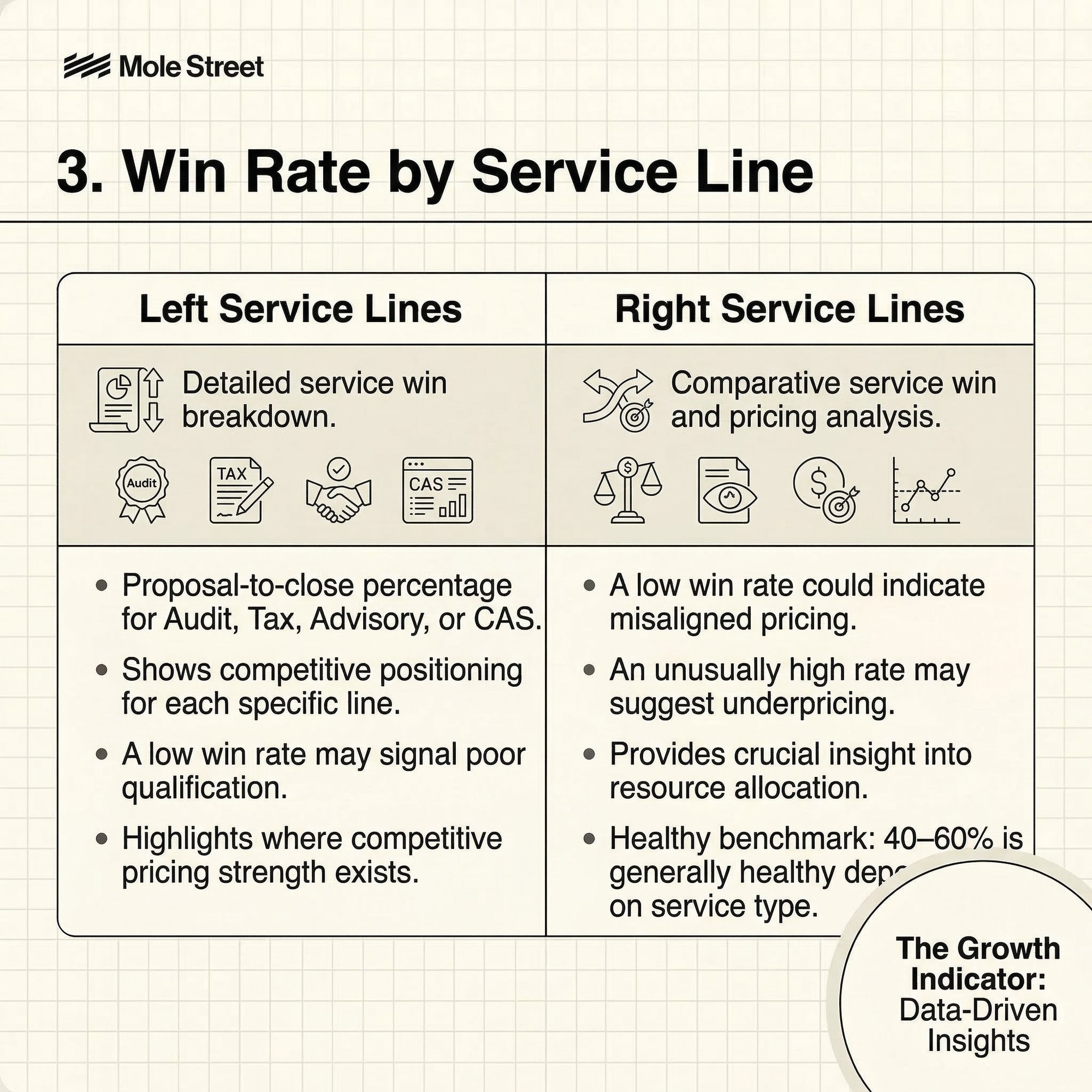
3. Win Rate by Service Line

Not all service lines close at the same rate, and the gap is usually bigger than people assume. The Win Rate by Service Line report breaks down how effectively your firm converts opportunities across tax, audit, advisory, and other offerings, so you can see where you're winning consistently and where deals are being lost. 

This matters because a strong pipeline alone isn’t enough. If certain services aren’t converting, it points to issues in positioning, pricing, or how those offerings are being sold. With this visibility, firms can double down on what’s working and fix what isn’t before it starts dragging down overall performance.

Image 4

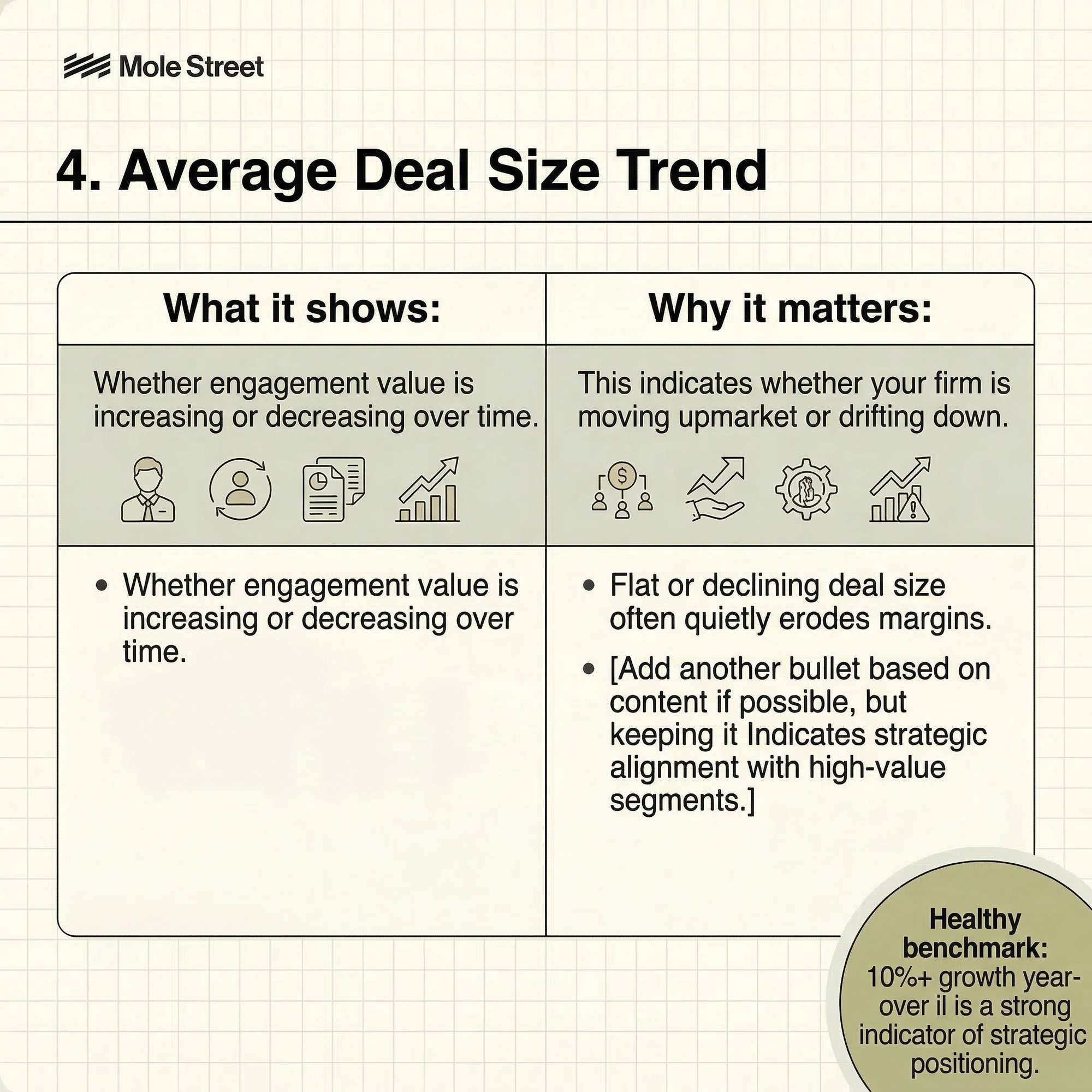
4. Average Deal Size Trend

Average deal size tells you more than how big your wins are. It shows how the firm is evolving. The Average Deal Size Trend report tracks how deal values shift over time, so you can see whether you're moving upmarket, expanding scope, or stuck in the same range.

Growth isn't just about closing more deals. It's about closing better ones. If deal size is climbing, that usually points to stronger positioning, smarter packaging, or more strategic engagements. If it's flat or shrinking, something is off, maybe pricing pressure, maybe missed chances to expand scope. This report makes it clear whether your growth strategy is driving higher-value work or simply increasing volume.

Image 5

Efficiency & Accountability Reports

Growth without discipline creates chaos. Most firms past a certain size can generate demand. The harder problem is converting, executing, and delivering consistently. Efficiency and Accountability Reports focus on how well your firm turns opportunity into revenue and how reliably partners and teams are driving that process.

These reports bring structure to execution. They show where deals are slowing down, where effort isn't translating into results, and where nobody is clearly owning the outcome. Leadership gets a real picture of what's stuck and why, so they can fix bottlenecks and reinforce expectations before momentum papers over the cracks.

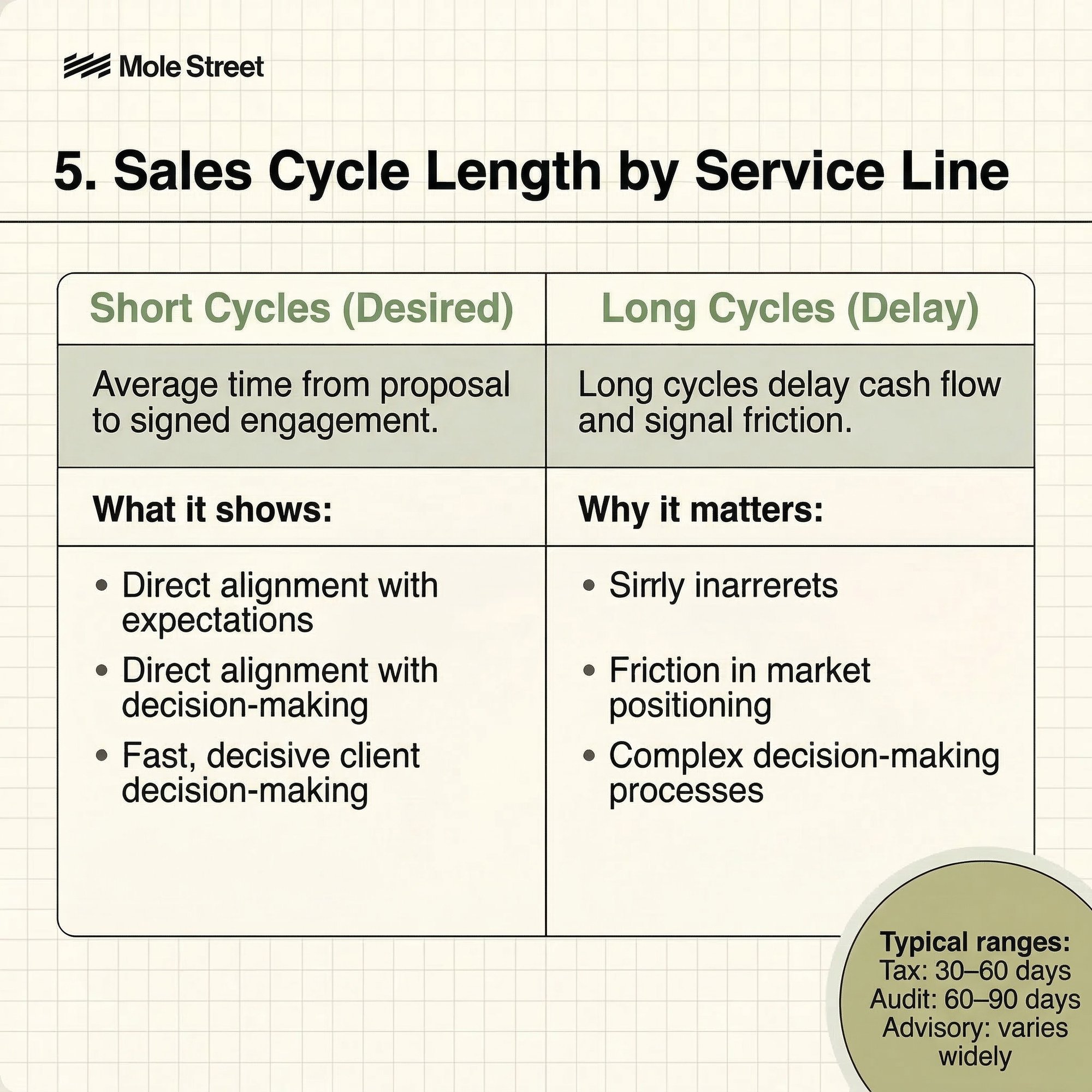
5. Sales Cycle Length by Service Line

The Sales Cycle Length by Service Line report shows how long it takes to move opportunities to signed engagements across your core offerings. Breaking it down by service makes it obvious where deals are moving and where something is dragging.

Slow cycles cost real money. A deal that takes six months instead of three isn't just late revenue; it's six months of partner time, follow-ups, and internal resources tied to something that hasn't closed yet. This report helps you find where that friction lives, whether it's positioning, pricing, unclear value, or stalled decision-making on the buyer's side, so you can fix the process instead of just adding more pipeline to compensate.

Image 6

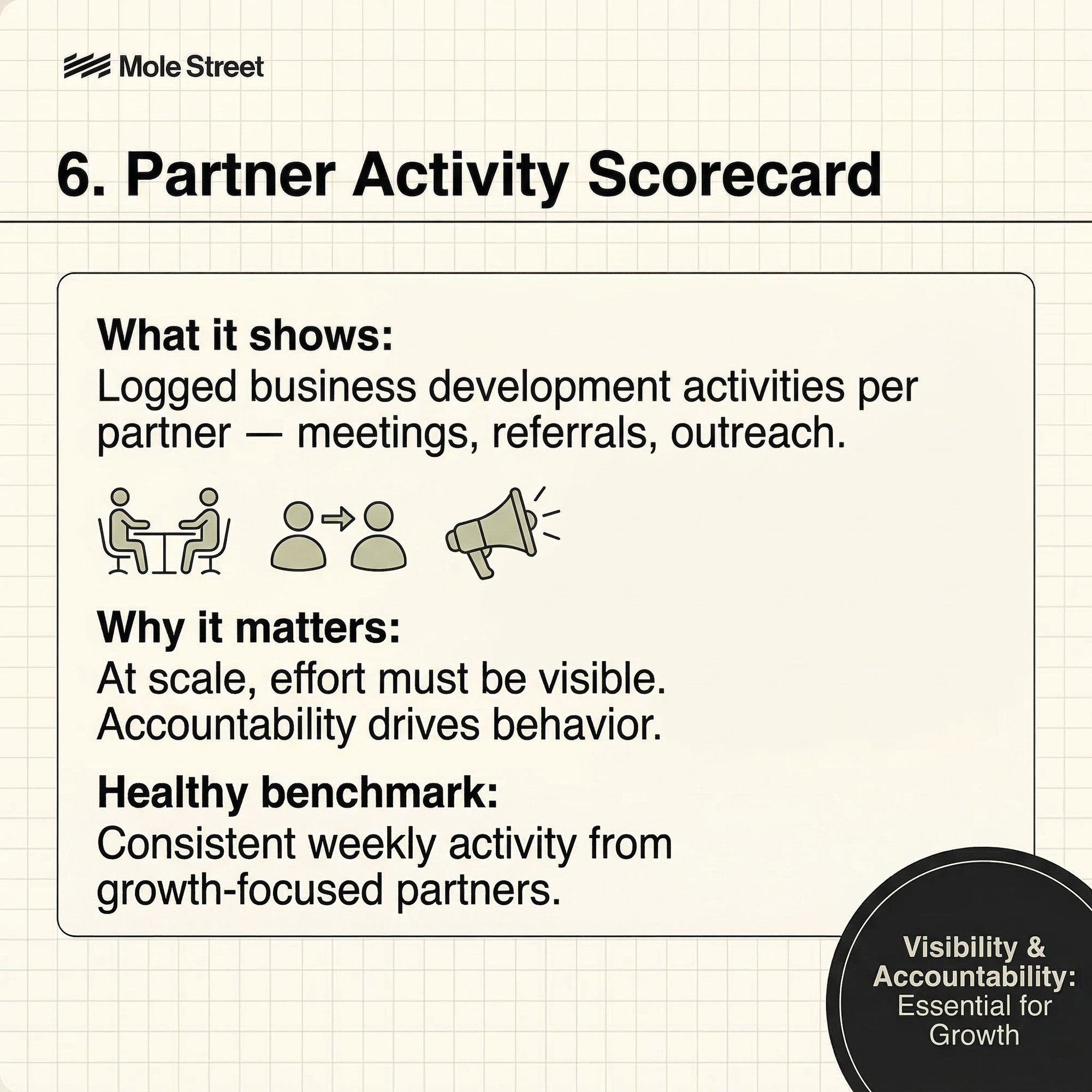
6. Partner Activity Scorecard

Revenue is a lagging indicator. By the time you see a problem in closed deals, the root cause happened weeks or months earlier in activity that didn't happen. The Partner Activity Scorecard tracks the actions that actually build pipeline: meetings, outreach, proposals, and new opportunities created.

Without something like this, gaps in activity go unnoticed until they show up as missed targets. The scorecard makes it possible to spot those gaps in real time. Who's consistently generating opportunities? Who's gone quiet? It shifts business development from something assumed to be happening into something you can clearly track and manage.

Image 7

Retention & Stability Reports

Winning new clients gets all the attention. But for most firms past $20M, the bigger risk is what's happening with the clients you already have. Small gaps in retention or missed expansion opportunities compound quietly, and by the time they show up in annual numbers, you've already lost ground.

These reports focus on the strength of your current revenue base. They give you visibility into client health, how much revenue you're actually retaining, and where existing relationships have room to grow. The goal is simple: make sure you're not pouring new revenue into a bucket with holes in the bottom.

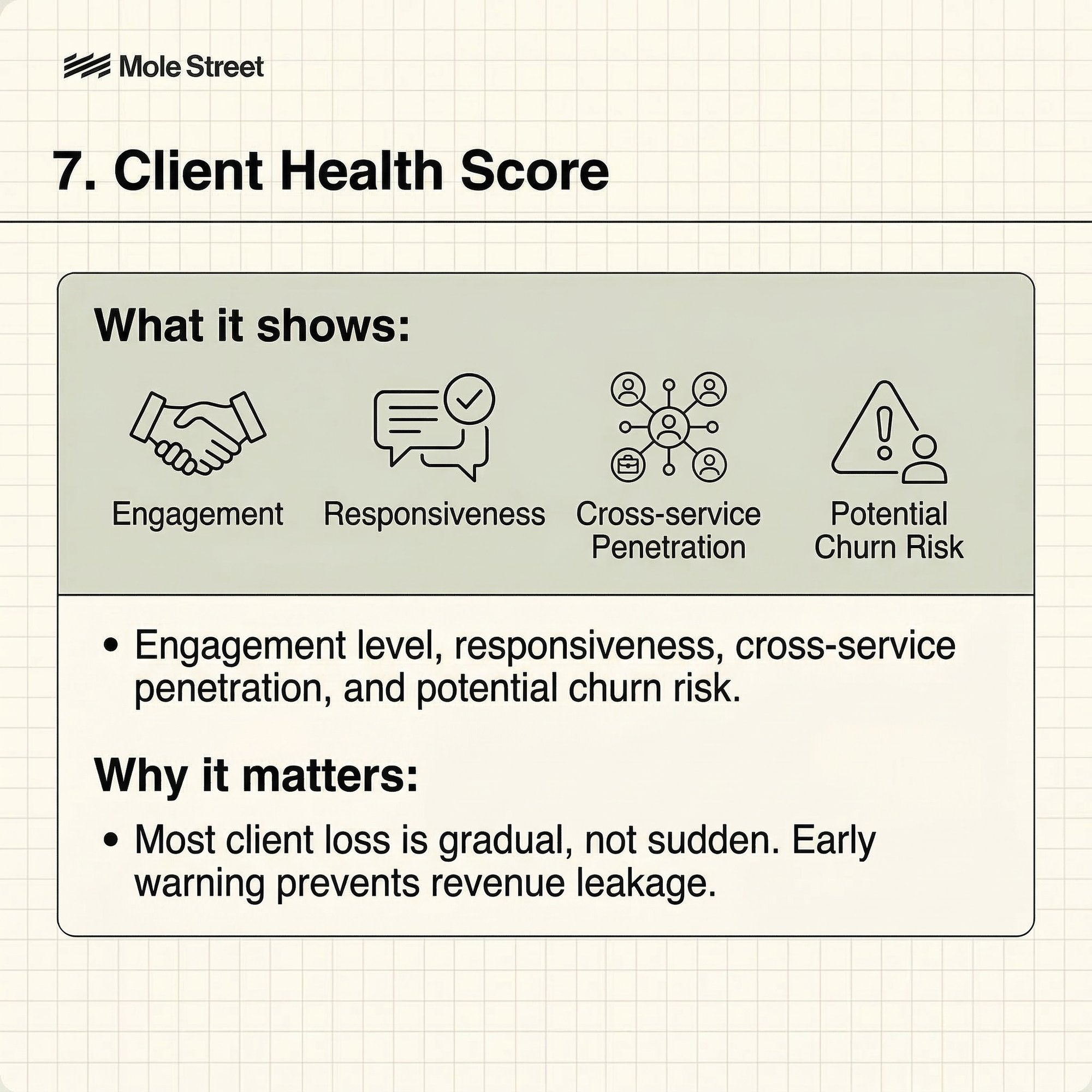
7. Client Health Score

Not all clients are equally stable, and the risk isn't always obvious until someone gives notice. The Client Health Score pulls together signals like engagement, service usage, communication frequency, and satisfaction into a single view of which relationships are solid and which ones are starting to slip.

Churn rarely happens overnight. It builds through small signs: fewer touchpoints, slower responses, less engagement with new offerings. The kind of things that are easy to miss when you're focused on new business. A structured health score makes those patterns visible early enough to do something about them, instead of finding out a client was unhappy when they're already halfway out the door.

Image 8

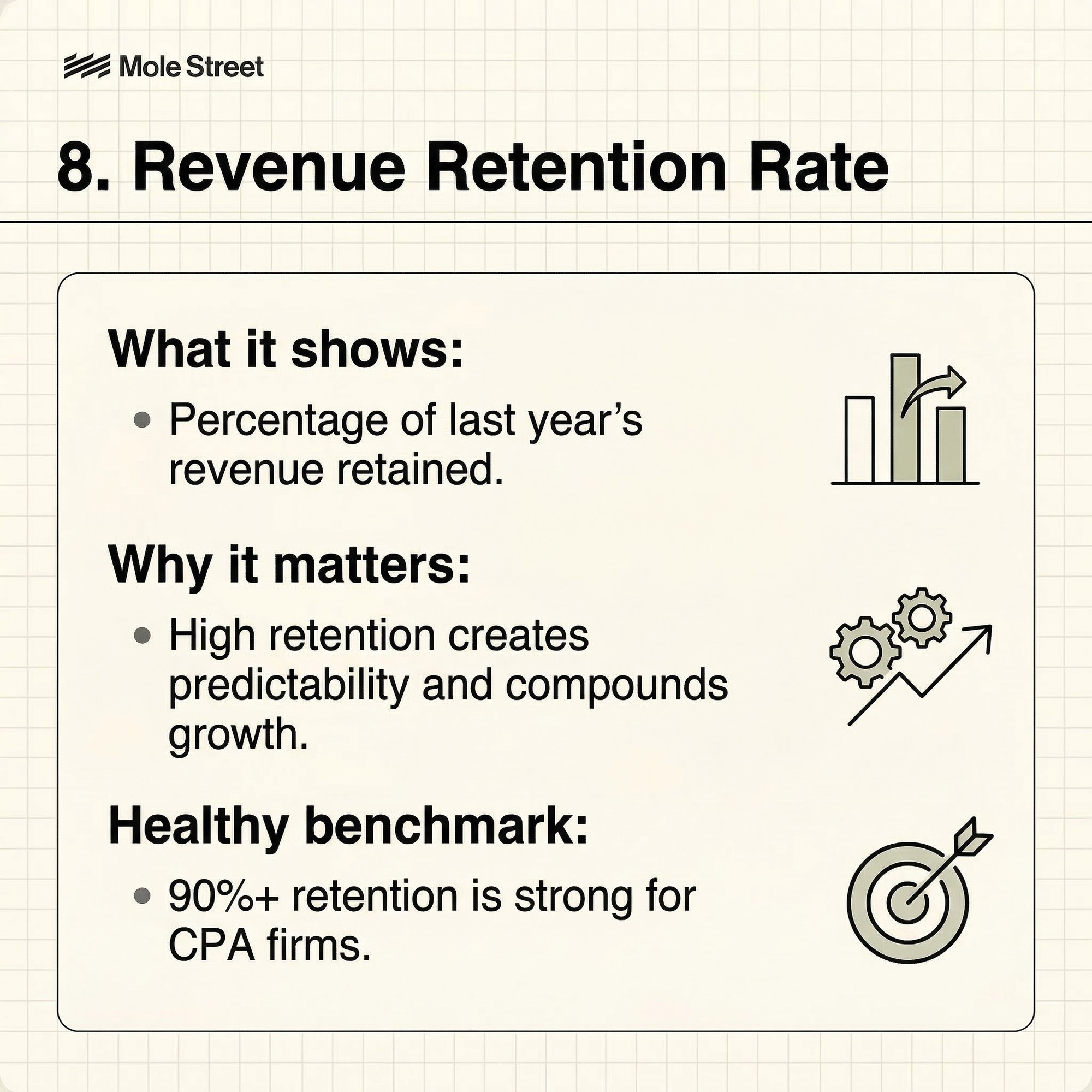
8. Revenue Retention Rate

A firm can grow 15% year-over-year and still be treading water if it's losing almost as much revenue as it's adding. The Revenue Retention Rate measures how much existing revenue you hold onto over a given period, after accounting for churn and contraction.

This is one of the most honest numbers in any reporting stack. Growth headlines can look great while the base erodes underneath. If retention is strong, your client relationships are working and the value you're delivering holds up over time. If it's declining, you have a problem that new business alone won't solve. This report tells you whether you're actually building on last year's revenue or just running to replace it.

Image 9

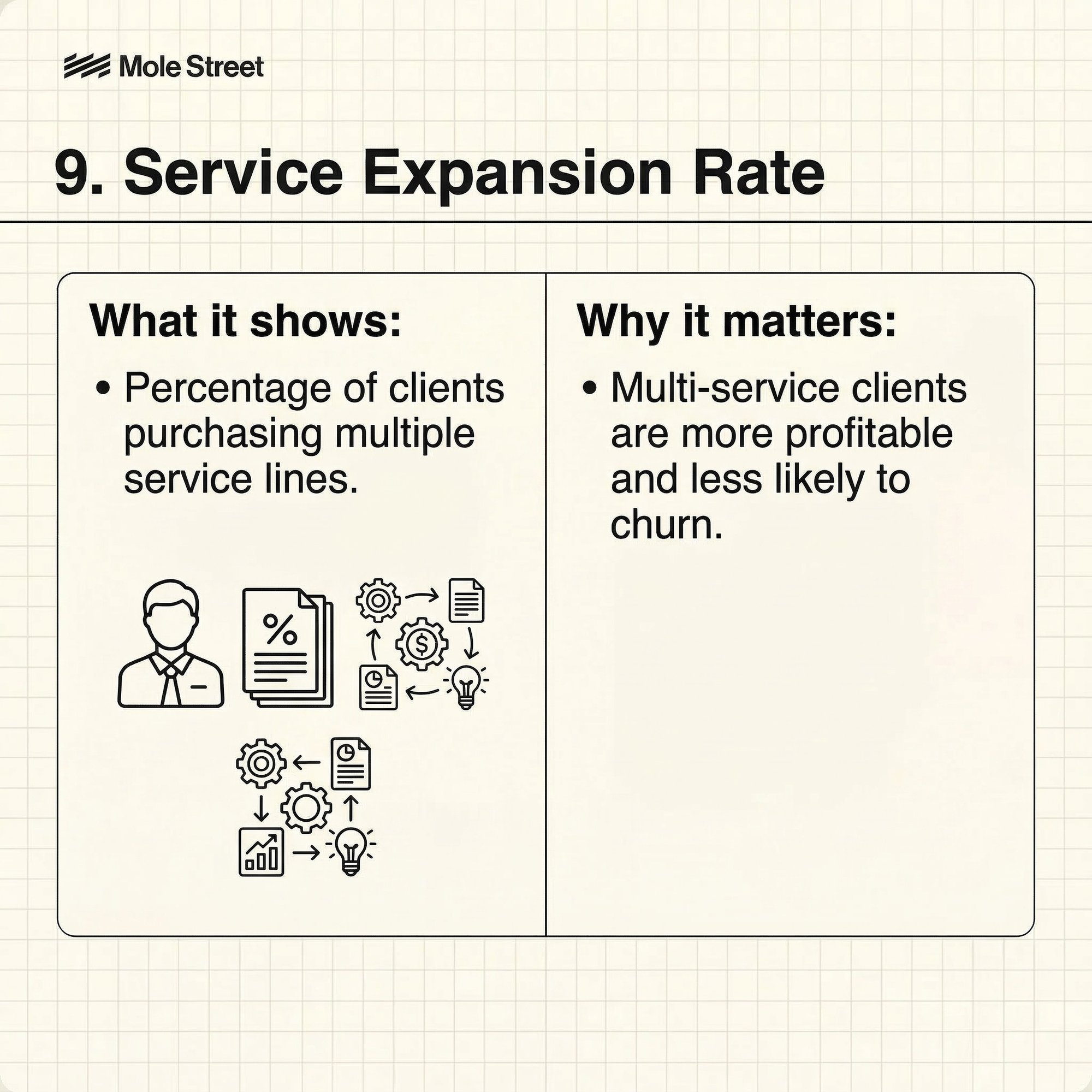
9. Service Expansion Rate

Your current clients already trust you, already have budget, and already know how you work. The Service Expansion Rate measures how effectively your firm is growing revenue from those existing relationships by adding new services or expanding scope.

Most firms underperform here. Not because clients don't want more, but because nobody is systematically looking for the opportunity. Low expansion rates usually point to siloed service lines, reactive account management, or simply never asking the question. Making these gaps visible allows you to treat your existing client base like the growth engine it should be, instead of constantly depending on new logos to hit targets.

Image 10

Revenue Intelligence Reports

As firms grow, not all revenue carries the same strategic value. Where it comes from and how it’s distributed starts to matter just as much as how much you’re bringing in.

Revenue Intelligence Reports break down the composition of your revenue. Which channels are driving growth? Which industries are you strongest in? How is origination spread across partners?

These are the questions that tell you whether your growth has a solid foundation or whether you're over-reliant on one channel, one vertical, or one rainmaker. The answers shape where you invest, what you protect, and what you stop pretending is working.

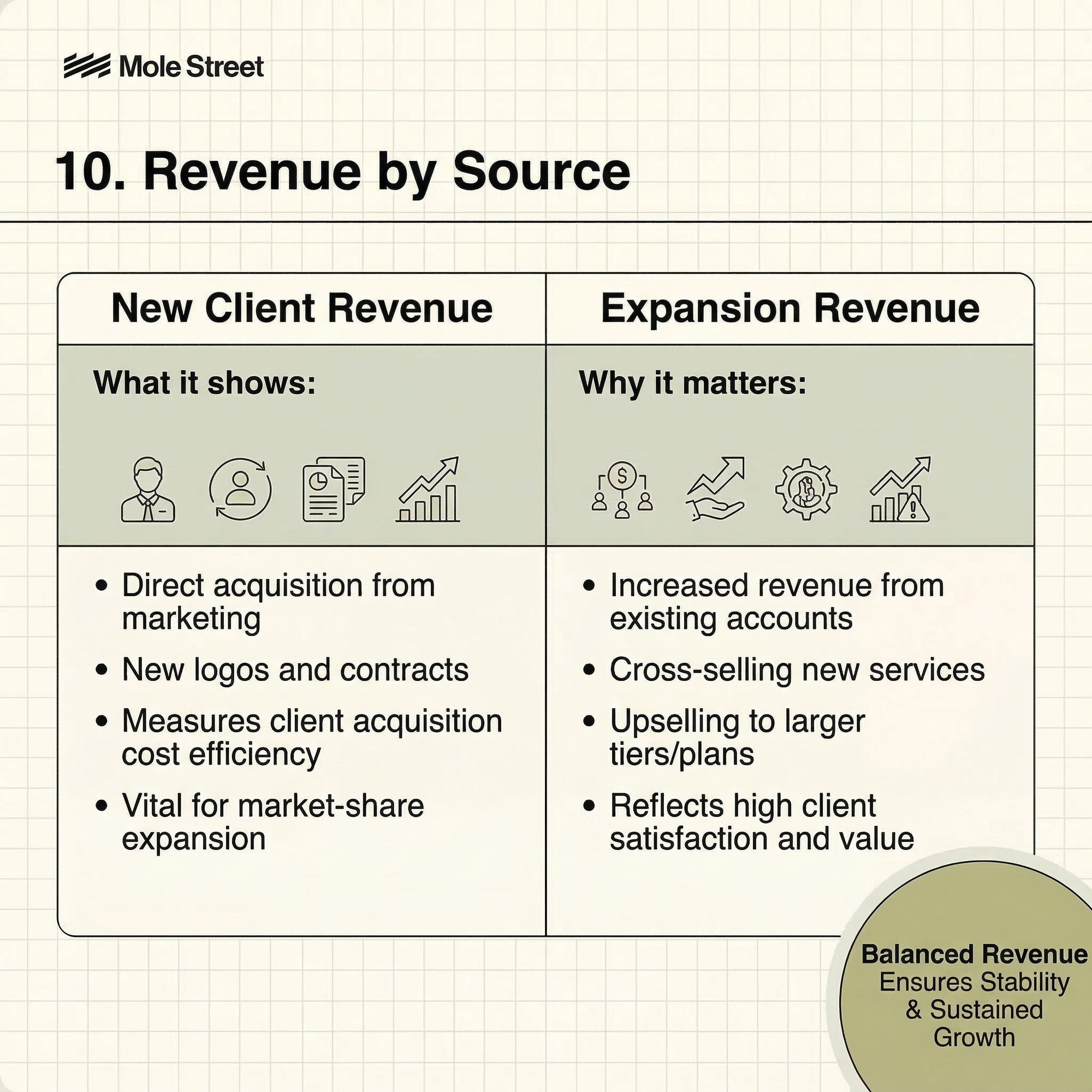
10. Revenue by Source

Most CPA firms, if they're honest, don't really know where their revenue comes from. They have a general sense, mostly referrals, but the actual breakdown between referrals, outbound, partnerships, and marketing-driven leads is fuzzy at best. The Revenue by Source report makes that picture concrete.

This matters more than firms tend to think. Referral-heavy revenue feels great until a few relationships shift and suddenly 30% of your pipeline disappears. A clear view of your revenue mix shows where you're actually strong, where you're exposed, and where spending money or effort would do the most to build something more predictable. It's the difference between growing on purpose and growing by accident.


Image 11

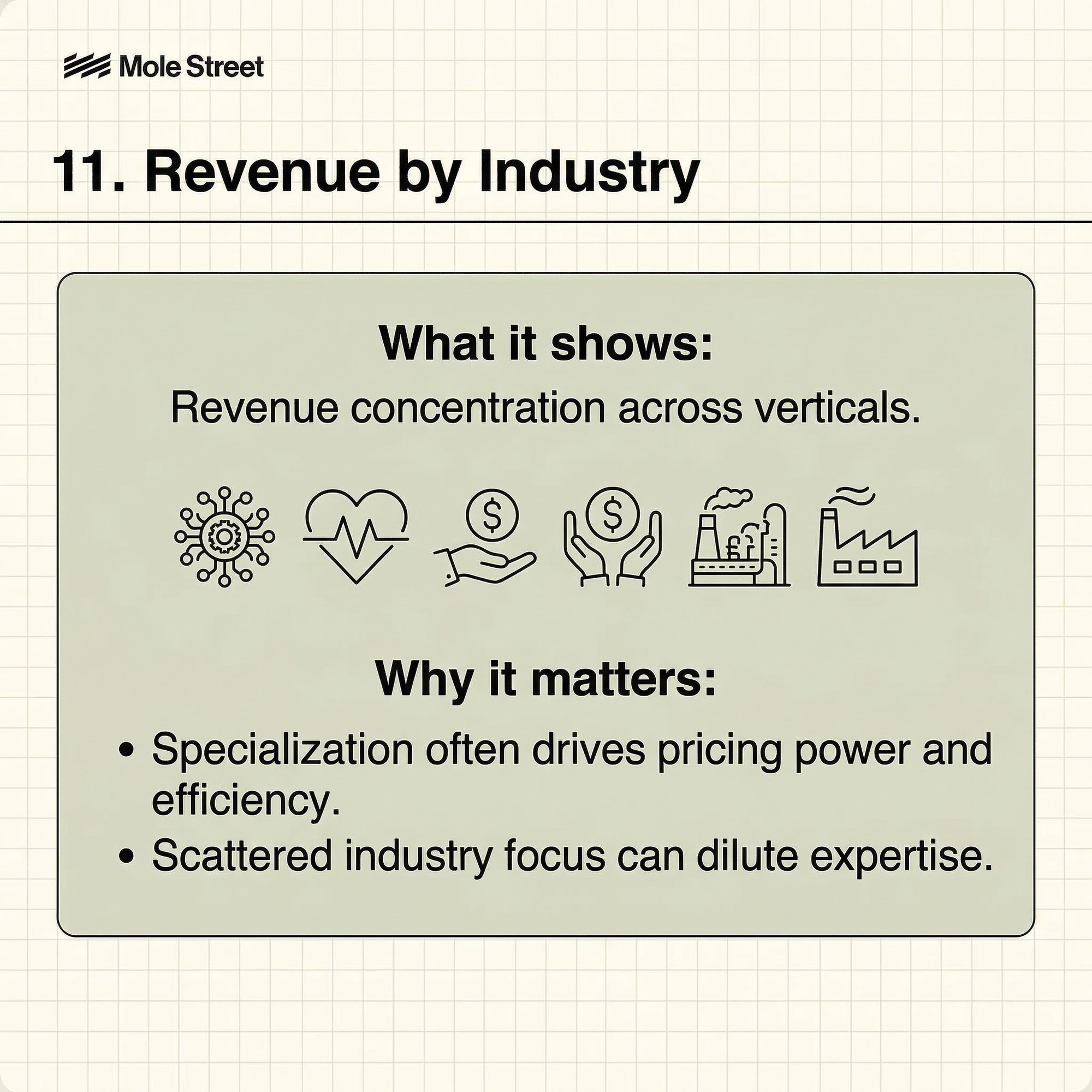
11. Revenue by Industry

Some verticals are more profitable for your firm than others. The Revenue by Industry report shows where you're actually making money across industries and where you're spinning your wheels.

Firms that try to serve everyone end up competing on price in most of them. The ones that grow fastest pick two or three industries where they have real depth, real references, and real positioning, then go deeper. This report gives you the data to make that call instead of guessing, so you can stop spreading resources across verticals that aren't earning their share.

Image 12

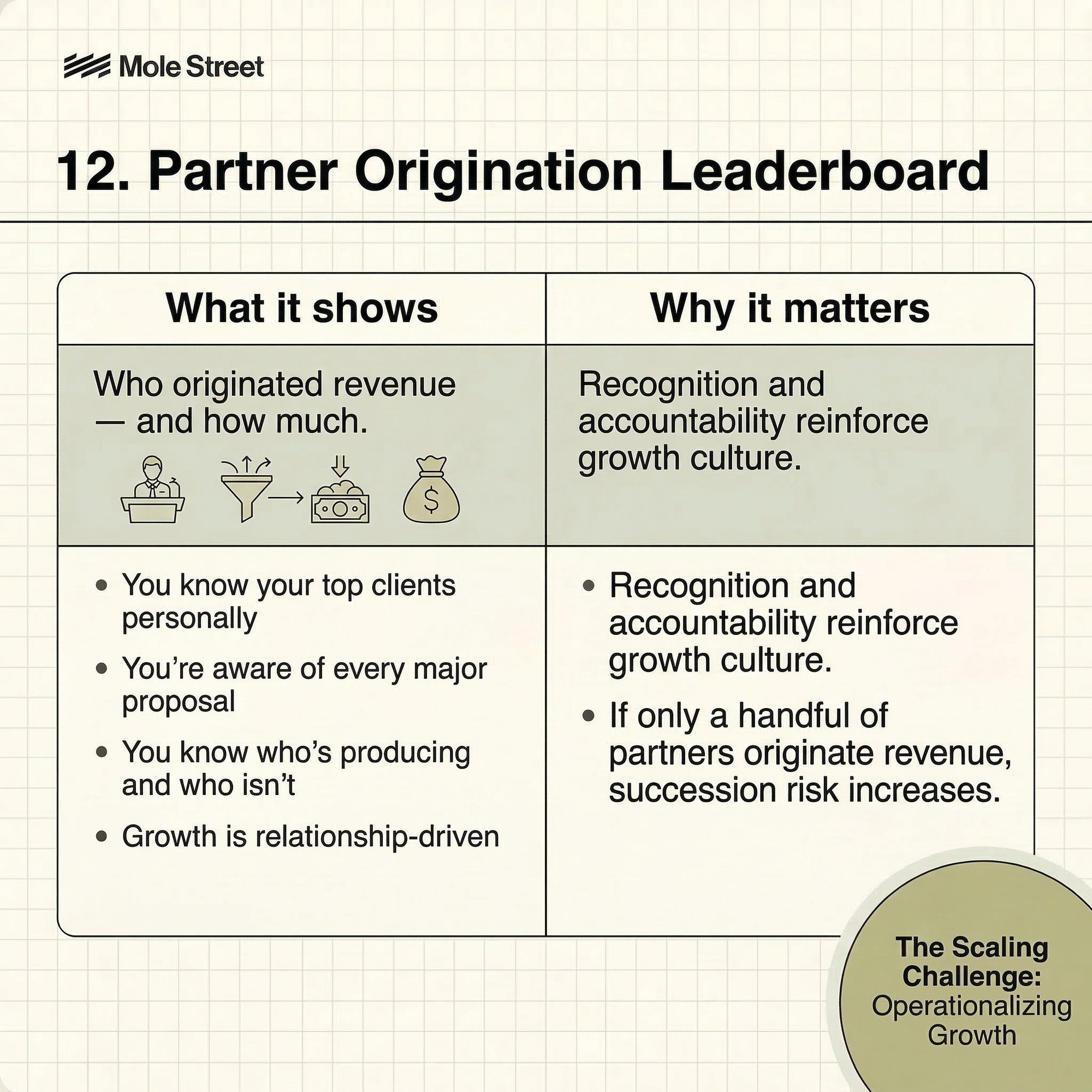
12. Partner Origination Leaderboard

Most firms rely on a small group of partners to drive the majority of new business. Everyone knows who they are, but few actually measure how lopsided it has become. A clear view of origination puts real numbers behind that instinct, showing who is consistently bringing in revenue and how concentrated that responsibility truly is.

That concentration carries more risk than it appears. If a small number of partners are responsible for most new revenue, any shift in their performance has an immediate impact on the firm. Making this pattern visible allows leadership to have honest conversations about business development expectations, recognize those who are driving growth, and build a pipeline that is not dependent on a few individuals consistently carrying the load.

Image 13

Scaling Past $20M Requires Visibility, Not Guesswork

There’s a saying that rings true in all walks of life, and that is to work smarter, not harder. A sound bite, yes, but it is rooted in the reality that at some point, accountants must have an approach that leads with structure and visibility. 

Now, that’s not to say that the first $20m doesn’t require prudence, systems, and intelligent decision-making. But once the revenue crosses that threshold, the complexity of the business amplifies. 

There are more moving parts. More people to manage. More money to account for. More risk to monitor. At this point, reporting becomes mandatory to assess the financial health of your organization and choosing to overlook this poses grave consequences. 

The 12 reports outlined here give you a 360-degree view of your firm’s performance, equipping you with the clarity needed to lead with confidence and scale with control.

Want to Take The First Step Forward to a Unified Tech Stack?